Blue Ridge Conservation will receive a $1,000 Green Grant award for its Community Beautification project that will support the bee population in the Lynchburg area.
Blue Ridge Conservation was formed in 2019 to promote conservation issues in the central Virginia area. Last year BRC partnered with the City of Lynchburg to plant three, one-acre wildflower pollinator beds on Lynchburg highways. All three acres bloomed for an extensive part of last summer and into the fall, providing support to local pollinators, as well as a beautiful display along the roads. Funds provided by Keep Virginia Beautiful will be used to replant the three aces again this year, to support pollinators for another summer. By demonstrating a pollinator support project in a highly visible location, the Blue Ridge Conservation will educate the public about the importance of pollinators, and provide a model that can be used statewide on highways.
Did you know that June is National Pollinators Month? This is just one example of a beautiful project that can benefit the bees, and all of us, by working together!
Naturally, Newport News is awarded a $500 grant for its Community Beautification project.
Naturally, Newport News is a Keep America Beautiful affiliate that works with local partners on community-based outreach, education, cleanup, and beautification projects. Their “Lets Can It” program was piloted at Deer Park Elementary School and the Environmental Magnet Elementary School in Newport News last year.
The Green Grants funding will be used to purchase five cleanup kits that include items such as trash grabbers, safety vests, gloves, trash bags, and hand sanitizer. The kits will be used to start programs at five more elementary schools this year. It is one of several programs they conduct to reduce litter in Newport News.
West Piedmont Planning District Commission, in Franklin County will receive a grant award of $1000 for its Community Beautification project.
Formed in 1970 and celebrating its 50th year, the West Piedmont Planning District Commission is one of 21 regional planning districts in the Commonwealth of Virginia. Since July 2019, they have been working with the “Plant Virginia Natives” campaign to increase local knowledge and buying behavior to use more Virginia native plants in our landscape. The WPPDC will enhance the Benjamin Franklin Middle School Nature Trail with native plants. The plants also provide environmental benefits for pollinators and wildlife, and include signs that will educate students and visitors. The WPPDC will use their grant to buy the native species for the entrance, outdoor classroom, and many areas along the trail.
Congratulations to West Piedmont Planning District Commission!
The City of Salem-Beautification Division, in the Roanoke Valley will receive a grant award of $1000 for its Community Beautification project.
The Beautification Division of the City of Salem will take on the project of restoring their WWI Memorial green space, which has been in need of improvements for many years. They will use the grant funds to restore the area and plant poppies, roses, an oak tree, and tall grasses, indicative of World War memorial gardens. The Roanoke/Salem American Legion Post is excited about the refurbishment of this area and will provide volunteers for the project.
Accomack-Northampton Planning District Commission will receive a grant award of $1000 for its Community Beautification project.
The A-NPDC provides regional planning and assists various jurisdictions with very diverse projects, such as local planning and community development. They will use their grant to beautify the Town of Parksley during its revitalization. Their effort to improve the visual appeal of the town will curb negative actions, such as littering, by residents and visitors. After considering the thoughts and hopes of the town residents, the A-NPDC will use perennial native plants in the landscape.
So this past weekend, as I was driving with my family, I noticed an older gentleman picking up litter along a very busy stretch of roadway…I wanted to pull over and tell him THANK YOU! So here is my question, what posseses ordinary folks to pick up litter when they didn’t cause the problem in the first place? Is it simply engrained in their make-up or did someone else teach them the importance of giving back? One or the other or a combination of the two, it makes no difference…I simply want to say THANK YOU!
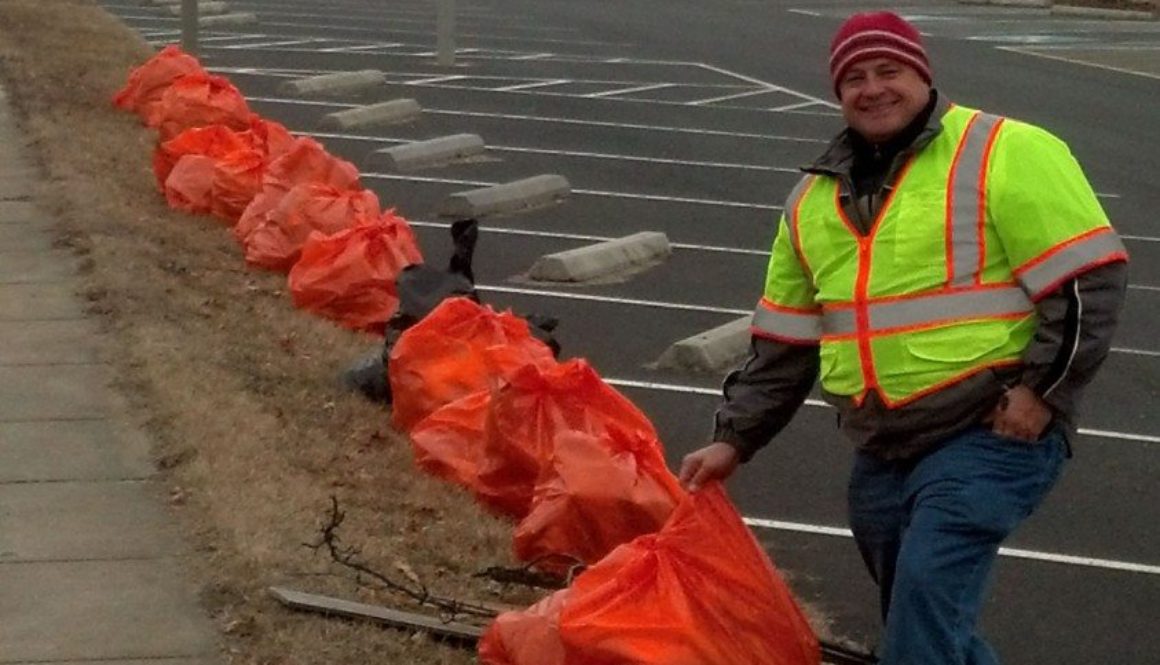
I recently learned of a gentleman, named Aaron (featured picture), in Northern Virginia who, without being asked, cleans up the roadways and waterways in the community that he lives in every week! He doesn’t believe he deserves any recognition but I do!
Even my own children will walk an entire stretch of beach and pick up whatever trash they find, I don’t even have to ask or prompt anymore, they know its the right thing and they do it. I know there are countless others who clean up litter either along the roads or waterways and I personally want to say THANK YOU. You are the true litter warriors!
So here is my challenge to you, next time you go to a park, beach, river, campgorund, etc., bring a bag, spend 15 minutes and clean up the litter. I promise that you will feel better by helping a green space stay green and your act may be seen by others and maybe they will think twice about littering next time or better still take your cue and make the commitment themselves to become litter warriors!
THANK YOU to all the unsung LITTER WARRIORS, you are the environment’s heros!
Nassawadox plants crepe myrtles to beautify historic area of town.
While I was on sick leave from my “real job” I was looking for ways to be able to help our town with our efforts to try and beautify our town center area. Unfortunately our town is like so many other small towns, basically no funds to do anything to make the town look better, and it presents a real challenge. The property in the area around our town center is owned by the railroad, and like so many other businesses which own so much land, there are no funds available to keep the area beautiful. It is hard enough to keep the railroad operating much less to try to beautify the areas around the tracks.
The Eastern Shore Tourism Commission has been trying to find ways to help the towns to spruce up their areas and we were fortunate in that a local architect, John Snyder, donated his time to draw up an architectural plan for our town center and/or our actual downtown area. Robert Lentz, a citizen of the Eastern Shore has also been instrumental in helping us to try and realize our goal to beautify the town. Both of these men have spent countless hours in assisting us in helping to make this “vision” become a reality. When I saw the plan, I thought what a nice idea and lovely plan for our town. I then began to wonder how on earth to make it a reality. Consequently my search for grants to help us attain the goal began.
I felt very fortunate when I located the KVB grant and thought that if we could get this grant it would definitely be a start for our project and give us something to build upon. I applied for the grant with high hopes but never dreamed that we would be successful, as I am certainly not a grant writer, but someone with a willing heart and spirit only. You cannot imagine how thrilled I was to receive notice from KVB that our town was successful in obtaining the grant.
Obtaining the grant meant that now we needed to obtain permission from the railroad and secure a lease in order to proceed with our plans for our downtown. This would be the first of many hurdles. The railroad was willing to give us a lease but we also had to comply with their requirements for planting and make sure we were not too close to the tracks, so as to impede their daily treks up and down the Shore. After obtaining this permission, then we had to find a local nursery that would be willing to do the planting and within the budgeted amount. We contacted 3 different businesses and only one, Hortco Garden Center, expressed any immediate interest in working with us to provide a quote and talk with us regarding this project. During the time we were working on the planning aspects of who, what, where and when, our area developed a drought condition and I certainly did not want to risk planting and losing the trees and being frivolous with our grant funds.
We have finally been successful in jumping all the hurdles in our path and our crepe myrtle trees are now established. They are planted in a platform that is close to the railroad tracks. This platform has historical significance to our town, in that it is where the train used to “throw the mail off the train as it passed through Nassawadox”. The trains did not stop, just hooked the mail bag on a “mail hook” and proceeded down the track. In the past because this platform is a gravel type base, it has grown up in weeds and grass. This summer we will continue to work on further beautifying this platform by keeping the grass under control and exploring ways to further enhance this area in our town.
Our plans for the platform are to try and secure a mail hook, to continue with beautification efforts, and to have signage as to the historical significance of the platform. We are hoping that the platform will become an area where townspeople and travelers alike can come to take a break from their hectic schedules and enjoy the surrounding area, maybe even visit a few of our local shops.
I am so very excited about the efforts of those who have provided us with a “vision” and hope that we are able to continue with our efforts to beautify a most important area in our small town. This will only be possible through the efforts and generosity of many people and organizations.
Keep Virginia Beautiful Beautification & Community Greening Grant Report:
Historic Jackson Ward Association
The Historic Jackson Ward Association (HJWA) represents the residents located in the blocks North of Broad, East of Belvedere, South of I-95, and West of 4th Street in the City of Richmond. The Association was established in the 1980’s and has been very active building relationships among community members and improving the quality of life for all its residents. For the last six years, the members of HJWA have taken it upon themselves to clean the neighborhood of litter, debris and graffiti – resulting in great community pride. This Community Revitalization began with three cleanups each year. Now, because so many of our neighbors do their own cleanups throughout the year, we scaled our organized community cleanups to two times a year – one in the spring and one in the fall. With this Grant we focused on expanding our initiative to include plantings for natural beautification and a lot of weed removal. KVB funding has been used to enhance our open spaces with native ground cover plants and small shrubs. In particular, funding was used for plants, mulch and a variety of garden tools and gloves, as well as trash grabbers and bags. In addition to the plantings, many of the volunteers improved the aesthetic value of the neighborhood by removing trash and debris from streets, sidewalks, and alleys. We are proud of our neighborhood and we want all of those who pass through to know that Jackson Ward truly is a beautiful place to live!
Measurement of Results:
Weight of trash collected— 1,800 pounds! Volunteers hauled various types of material to the city’s trash truck, including several couches, mattresses and televisions as well as woody and plant debris and portions of a fence. Also collected were 19 bags of trash filled with food wrappers, fast food containers, clothing, bottles and cans . Approximately twenty tires were recovered and sent to a proper disposal facility. The tonnage for the day’s collected materials was estimated at 1,800 pounds.
Numbers of Volunteers— 20 neighbors and VCU students, two police officers, and two public works employees (with their truck!).
Area and number of Plants Planted— 675 square feet of land adjacent to the neighborhood playground at Abner Clay Park were revitalized with forty native plants (including black eyed susans, aster, coreopsis, phlox, and ferns). In addition, monkeygrass was planted to fill in gaps that help improve aesthetics and control soil loss. After planting, 24 cubic feet of mulch was spread over the area to help retain moisture and enhance the site.
A friend of ours recently turned us on to a cool video called The Mountain on Vimeo. This photog has done some really remarkable work and his time-lapse shots of the Milky Way are some of the most amazing we’ve seen. (You can watch it here.)
Here at Keep Virginia Beautiful we talk an awful lot about beautification and greening things up but we began to wonder about what other forms pollution might take.
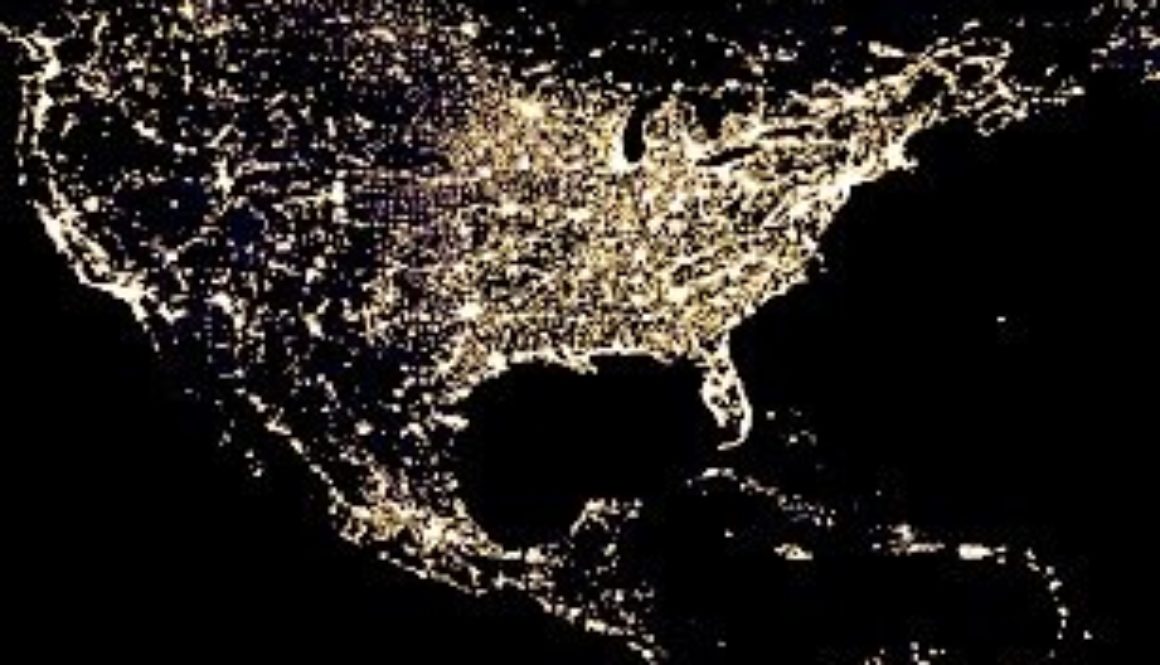
The whole Milky Way sequence brings up the issue of light pollution. Some of our friends in Western Virginia or more rural areas may get in some serious stargazing but here in the River City we have a relatively starless sky. Nearly 40% of Americans no longer view a night sky that the human eye perceives as dark. In addition to the loss of twinkling stars light pollution takes its toll on our natural friends. Studies show that artificial light changes the spawning cycle of certain types of fish that rely on a lunar clock. Scientists observing tree frogs noticed that they stopped their mating calls whenever a nearby football team held a night game. Scientists in Germany studied the impact of new gas stations and found that their lights attracted huge numbers of moths and other bugs the first two years but then the numbers dropped radically. Seems the lights from the stations attracted unusual numbers of bugs which lured unusual numbers of bats that ate the bugs and destroyed the bug reproductive cycle.
What’s the easiest fix? Use only the light you need, when you need it. Maybe your yard looks great at night but do you really need it to glow like Vegas at 3 a.m.? We don’t think your trashcans are afraid of the dark. And look at the type of fixture! Are you lighting what you need to light or are you sending a Bat-Signal to the entire city? Make sure you have energy efficient lighting in a cut-off fixture. This type of fixture directs light where you need it and doesn’t allow it to bleed out where you don’t.
Remember the long car trip as a kid? “Hey kids: lets play the quiet game.” Dad would give a dollar to whoever could not talk the longest. An examination of noise pollution would ask, “Where is Dad when we need him”?
The word “noise” came from the Latin “nausea” which meant seasickness or discomfort. Does your Honda sound like an atomic leaf-blower? Is the kicker box registering with the U.S. Geological Survey? Noise pollution causes both physiological and psychological issues. It can affect sleep patterns, cause aggression, severe depression and cause panic attacks. Our animal friends feel it too. Pods of whales beached themselves after being exposed to military sonar. European Robins in urban environments sang more at night. Why? It was quieter and they could get their message out. Zebra Finches were less faithful to their partners when exposed to traffic noise. “The car horn made me do it!”
What to do? Start your car. Turn on the stereo to the level that you would use on a trip. Look at yourself in the rearview and say “tinnitus”. Lips moving but you can’t hear your voice? Too loud. In some instances a power tool is a necessary evil. Not using it? Cut it off or better yet go electric. You could challenge yourself to the “quiet game”!
Remember, the beauty of Virginia is not just affected by the soda bottle on the side of the road. It is our contributions to the vistas and scenery that we all see and hear.
We got an email from a friend in Manassas (thank you Cindy Brookshire!) who gave us an update on one of our 30 Grants in 30 Days Winners.
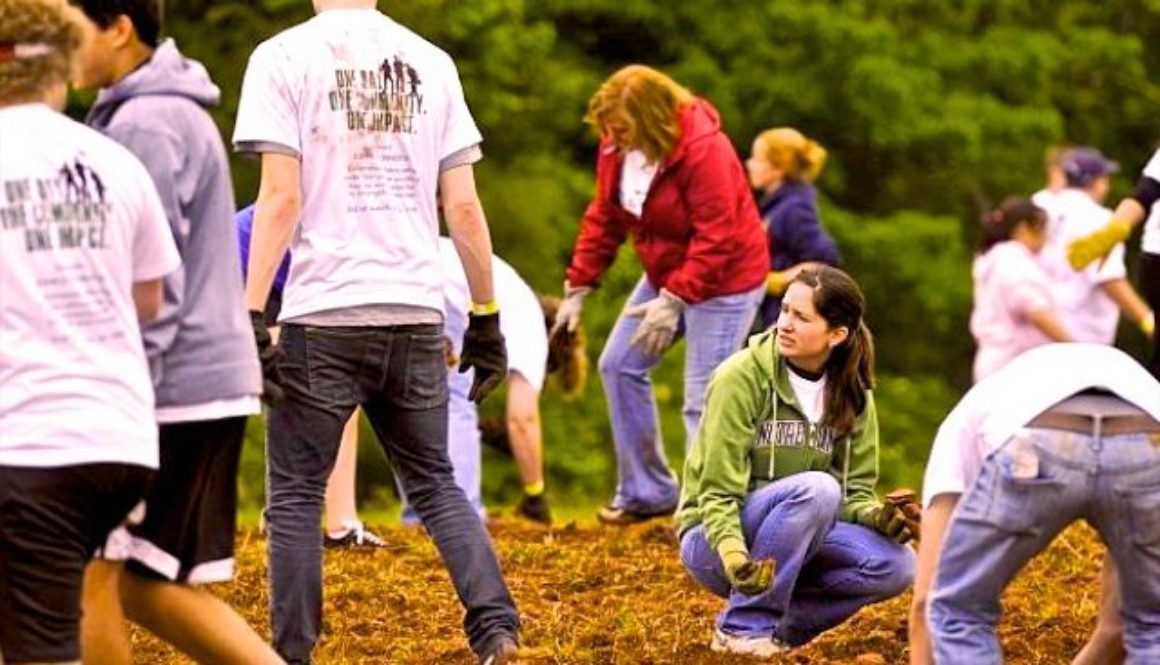
1 By Youth swarmed Point of Woods and Stonewall Park for a day of some truly amazing beautification. You can read about it here. Over 600 volunteers from all over Virginia, Maryland and as far away as Pennsylvania jumped in with rakes, shovels, and other tools to revitalize a neighborhood and a park with cleaning, planting, painting, and creating a tribute gazebo and community garden to honor Sgt. John D. Conner III, the only Manassas City police officer to die in the line of duty.
The volunteers made upgrades to playgrounds, cleaned up woods and creeks, started the garden, and helped clean up some of the neighboring homes. You can see more fantastic photos of the event (courtesy of Bill Corbett) here.
These fine folks had a host of contributors and donations, like music, meals from Chick-Fil-A, and visits from the George Mason Cheerleaders. We played only a small part, but we’re glad to have been able to contribute. We’re especially proud of 1 By Youth for the amazing gift that they were able to give this community.
We’d love to hear from some of our other winners and see some more successes at Keeping Virginia Beautiful!
 Blue Ridge Conservation will receive a $1,000 Green Grant award for its Community Beautification project that will support the bee population in the Lynchburg area.