Suffolk puts butts in their place thanks to KVB’s grant.
Themed, “Butts Are Litter Too!,” Keep Suffolk Beautiful and the Suffolk Clean Community Commission launched a Cigarette Litter Prevention campaign to reduce the amount of cigarette butts littered in city parks and at major city-sponsored events.
The key to the success of any campaign is education. Keep America Beautiful, Inc. reports that 62% of butt litter occurs because there is no awareness, education. We planned to educate the citizens of Suffolk about the fact that cigarette butts are litter too. This was accomplished by distributing cigarette litter prevention brochures and pocket ashtrays during all Suffolk Clean Community Commission events and major City-sponsored events such as Peanut Fest and TGIF concerts. We will also grab citizens’ attention through public service messages and visual reminders using the slogan, “Butts Are Litter Too!”
We provided adequate ash receptacles in City parks. Portable receptacles were purchased for city-sponsored events. The City of Suffolk participates in Clean the Bay, a regional cleanup of the Chesapeake Bay watershed, annually. Following the day’s events, a look at the reports from the Zone Captains usually show that there were more cigarette butts collected at the cleanup sites than anything else. During last year’s Clean the Bay Day, the Zone Captain at Bennett’s Creek Park reported 1811 cigarette butts collected.
The intent of this grant is to support sustainable prevention and a measurable reduction of cigarette litter. While a few city parks already have ash receptacles, most of them did not. Study results also state that for every additional ash receptacle, the littering rate for cigarette butts decreases by nine percent. With this in mind, grant funds will primarily be used to purchase ash receptacles for the city’s five major and eight neighborhood parks. With the availability of these ash receptacles, we are hoping for proper cigarette butt disposal. The City of Suffolk’s Public Works department will provide the in kind service of emptying the ash receptacles at city parks and events.
The project was led by Hattie Lester, City of Suffolk Litter Control Coordinator and Kathy Russell, chair of the Suffolk Clean Community Commission. Ms. Lester held this position for two years and increased the city’s beautification, community greening and recycling initiatives since coming on board. She was integral in writing, attaining, and administering a $10,000 Waste Management grant through Keep America Beautiful, Inc. after only being with the city a year. The grant was used to implement a Recycling Rangers paper recycling program in two Suffolk Public Schools. She incorporated quarterly recycling drives in the Litter Control Program and has increased the number of community and neighborhood cleanups in the city by 50 percent. Kathy Russell is the Educational Representative with Tidewater Fiber Company (TFC Recycling). She has been with TFC Recycling for six and a half years. However, she has been in the waste management industry since 1994. TFC Recycling provides recycling services for cities of Suffolk, Chesapeake and Virginia Beach, Virginia.
Fauquier County Grant from Keep Virginia Beautiful : Plastic Bag Reduction and Recycling Awareness
In April, 2010, Fauquier County applied for and received a $1,000 grant as part of Keep Virginia Beautiful 30 Grants in 30 Days program. With the grant funds, Fauquier County designed and purchased reusable grocery shopping bags to give out at various events that occurred during 2011. The purpose of the giveaway was to increase awareness about plastic bag litter and that the fact that reusable bags were better for the environment as a whole. The first event where these reusable bags were handed out was at the Fauquier County Public School annual benefits fair in August, 2011. Teachers and staff were very appreciative to receive our attractive bag but also receptive to the plastic bag recycling fact sheet that went along with it (FQ Plastic_Bag_Flyer). After the benefits fair, teachers who missed out, wrote us and requested a bag. This event led more schools to accept TREX’s challenge to collect from the community more retail plastic bags in the schools.
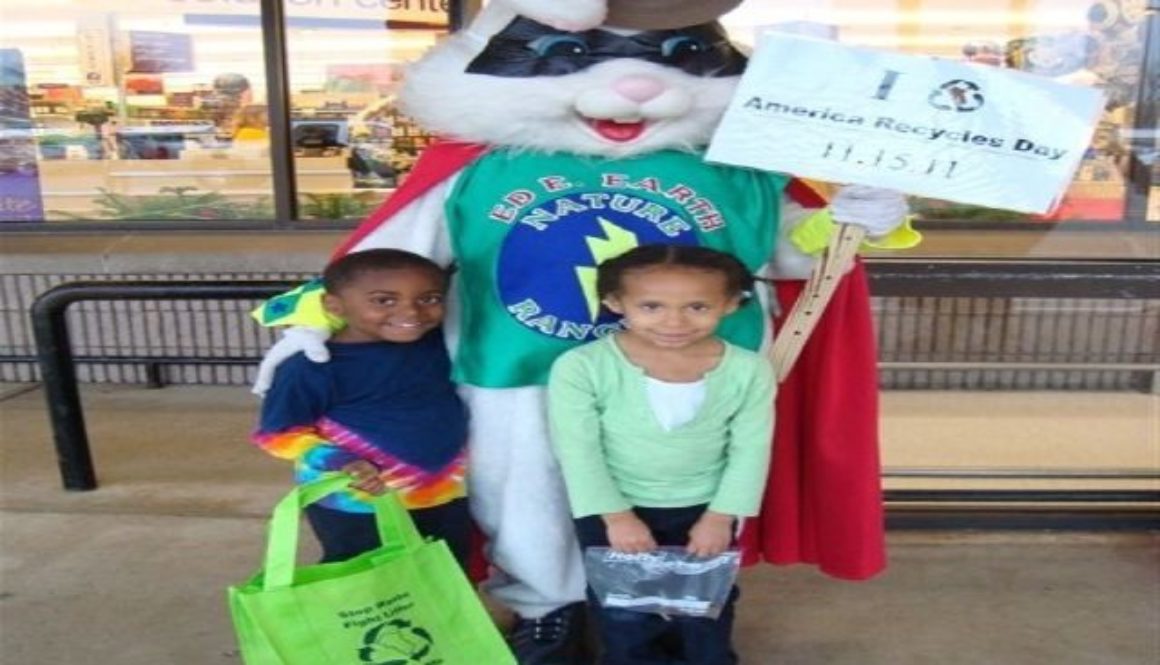
The second event where these reusable bags were handed out coincided with the county’s celebration of America Recycles Day on November 15, 2011. This year, the county’s recycling mascot, Ed E. Earth the Nature Ranger Rabbit, handed out bags to residents at the county’s main waste and recycling collection facility and at three grocery stores in the Town of Warrenton. This provided a wonderful opportunity to reach out to residents who otherwise did not know that plastic bags could be made into new items if only disposed of properly. Most residents were aware of the litter issue. The county thanked Bloom, Safeway and Giant for the opportunity to share in heightening of the awareness for the need to recycle in general in Fauquier County.Fauquier County thanks Keep Virginia Beautiful for its grant funds and feels as though litter prevention and recycling campaign was successful. Awareness is the key to success and if giving someone a small token to serve as a reminder of their needed participation.
Check out the awesome flyer that Fauquier County put together…FQ Plastic_Bag_Flyer !
Working at Staunton River State Park for 13 years now, I have seen the Park make strides in providing guests with the services and facilities they have come to expect. Using each visitor’s comments to think of ways to correct problems is just one of the many tools we use to enhance their visit. While the park has grown in many ways using this method, there have always been a few challenges that we have not quite tackled. Many factors contribute to our inability to correct these problems but two of the most common would be manpower and/or funding.
In the past few years as visitors have become more environmentally conscious we have received a lot more feedback on litter and recycling. Some of these issues have been easier than others to address. People often complain about trash on the shoreline. We are easily able to offer this up as service project for Boy scouts, Youth Conservation Corp, church groups and other organizations that are happy to pitch for a day long service project. Cigarette litter on the other hand is not one of those easy solutions. While we have had groups help clean cigarette litter from around buildings, campsites, and picnic areas, it is just not one of those glorious tasks that everyone is eager to help with.
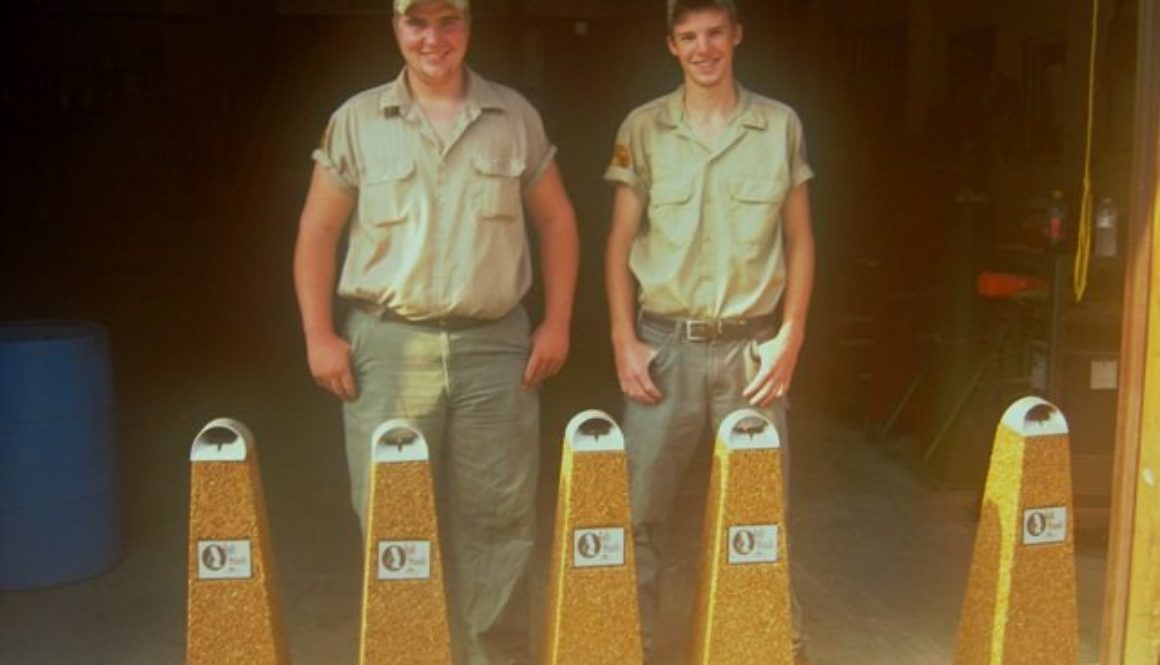
So how do we get there? How can we reasonably get the amount of cigarette litter under control? All good questions that from time to time we thought we had the answer to. From signs to almost every type of container you can think of, we have tried it all and the problem seemed to remain the same. There always seemed to be an issue with the containers that made them just as big of a problem as the litter on the ground. In late summer of 2010 just before returning to college one of the seasonal maintenance rangers came in my office with this picture of a cigarette urn that he thought would help accomplish our goals. A few of the features he noted was the concrete construction, the overall recognizable design, and colors that would compliment the rest of the park. So I added it to my work list to review even though I knew that there was no way to even think about installing 30 or more of these units around the park. On my list it remained, getting glanced at every few weeks until I received an e-mail about Keep Virginia Beautiful 30 in 30 program.
There was a grant category specifically geared toward cigarette litter and it quickly drew my attention. This would be the perfect opportunity to install several of the cigarette butt receptacles that were recommended by the seasonal staff. They would even have something to hold over my head if the urns worked the way they were supposed to. In May of 2011 six new concrete cigarette urns were installed in some of the areas that have the worst problem with cigarette litter. Following Labor Day 2011, the urns were emptied and 2 ½ five gallon buckets worth of cigarette litter were saved from littering the ground. While I never thought transitioning to a specific style urn would help the problem, I must admit that I have been proven wrong. We are now planning to continue the effort to change all the different containers in the park over to this style as we try to make Staunton River State Park a little cleaner for you!
If you’re reading this, you can probably thank a power plant.
Unless you’re completely off of the grid, you need consistent, reliable electricity to get your power. Most of that power comes from some pretty dirty sources, though.
A recent EPA report says that power plants contribute a little over 72% of the carbon dioxide-equivalent emissions nationwide. What does carbon dioxide-equivalent mean? It means greenhouse gasses. The “equivalent” part of that sentence is carbon monoxide, methane, and mercury. Most of these emissions are from traditional coal-fired plants. Coal is our largest source, with petroleum second.
Most of the raw product that we use for power here in Virginia comes from out of state. That means trucks and trains hauling in coal and oil and that means more exhaust and greenhouse gasses. Our state does have some coalmines, and a silver lining is that we use less coal than we produce, but that silver lining is kind of dingy. Coal mining is a dirty business and some methods destroy the beauty of our Commonwealth.
Pittsburgh has had a bad reputation for many years as a dirty city. When it was younger, it made a name for itself as a steel-producing town (Hello? “Steelers”?). The result of their industry was smog, polluted water, and sickness. Soot became so thick in the air that the city cut on the streetlights during the day so that people could see.
Pittsburgh has changed a great deal. Steel is no longer the driving force of their economy and they’ve spent a ton of money and energy to revitalize their waterfronts. Green spaces have sprouted up and they’ve invested heavily in luring companies like Google, which contribute jobs and taxes while eliminating pollutants.
Pittsburgh still has a problem, though. The American Lung Association ranked the worst cities in the nation for air pollution and the Steel City ranked third. How could this be? They’re still dealing with the effects of their history of industry, and guess what else? Geography. Pollution from coal-burning power plants in Ohio, Indiana, and Illinois floats across Pennsylvania and gets trapped by the picturesque Allegheny Mountains that surround the city.
So what are our options? Can’t we invest more in cleaner energies and renewable sources?
A cleaner energy is nuclear. We get much of our power from our nuclear plants, like North Anna and Surry. Nuclear is clean and efficient, but it too has a price. There has been a great deal of disagreement over North Anna following our little earthquake, and they felt those rumbles up in Maryland, too. Keep in mind also that the Calvert Cliffs Nuclear Plant of Maryland is just right up the Chesapeake Bay from Surry. When you look at what happened in Japan following their earthquake and tsunami it makes sense to be a tad nervous. Those of you in Central Virginia have a nice little nest of potential disaster to snuggle in.
Renewable means many things, like solar, wind, hydroelectric, and less commonly thought sources like wave energy. Hydroelectric is dams and lakes like Smith Mountain. That’s about 2% of our production. Other renewable sources, like wood and biomass are another 2%.
How about solar? Solar technology, while expanding by leaps and bounds, is still costly. There are also developments that need to be made in the retrieval and storage of the energy. You don’t get much juice on a cloudy day. Maybe our friend Bertrand Piccard could help us out?
Many are looking at wind for our future. Wind has risen to almost 2% of our energy supply across the nation, and it would be a great solution here. You don’t need a great deal of wind to generate electricity. You just need a consistent supply of it. The eastern half of our state is an easy drive to the ocean, and it’s always blowing there. When you cross the bridges on your way to the beach do you ever take a look around? You probably see sailboats in the Bay. That’s wind, baby!
We also have a great resource in the western areas of the state. The weather in our country moves from west to east, and the winds from the prairies run right across our beautiful Blue Ridge Mountains. A few turbines on a few ridges could contribute some serious kilowatts!
The best place to start is right where you’re sitting.
Take an inventory of your energy usage right there at home. Do you leave a room with the light on? Are your devices humming away 24/7? Did you choose your appliances for their Energy Star ratings?
Many of you have chosen to invest in a little renewable on your own. As we drive around our state we see solar panels here, little turbines there. We’ve even met several fine folks who’ve invested a little in geo. If you dig a hole you’ll realize that the earth is cool in the summertime and warm in the winter. There are systems that will take advantage of that and use the earth’s temperature to heat and cool your home. We don’t live in Iceland, so it still uses energy to pump the air, but it is much more efficient and therefore uses less energy.
We suggest you unplug something. Realize the power of power. When you’re up on Old Rag, we hope that the vista is clear. When your toes are in the sand at False Cape, launch a kite and feel some wind. When you open the refrigerator in the middle of the night and the light comes on, don’t forget where that electricity came from!
Exciting Legislation coming up during this session of the General Assembly. Delegate Joe Morrisey (D) is submitting a revision of our current litter laws! To read the full proposed bill, click here: HB114_01.03.12
Basically, he is taking away the prison time and up to $2500 fine and simplifying the litter laws to be very specific about how you dump your litter and trash, including from your vehicle, to be a flat $100 fine and community service ( to pick up the very litter disposed of improperly in the first place). I think this is much more enforceable and cut and dry; you litter you pay$100!
This is definitely geared toward cigarette litter on the roadways. Cigarette litter makes up 38% of all litter and costs our state millions of dollars to clean-up, not mention the countless fires started by cigarette butts. Litterers beware, if you toss that butt…you are going to pay!
PICTURE ABOVE: Shows litter removed from a 1 mile stretch of 288…that’s unacceptable!
So. How was your Holiday? You hopefully spent some time with family and friends. You hopefully got to indulge in some delicious foods. You hopefully got to share in some gift giving. What did you get this year? More importantly, what was the ecological impact of your gift?
The number one item on many wish lists this year was a gadget. For many it was a new smart phone. Almost 7 million Android and iOS devices were activated on Christmas day alone. This leads to 2 questions: what is in your current phone and what are you doing with your old one?
We’ve shared with you before about the hazardous chemicals that go into making your clever little device. Tasty things like arsenic, cadmium, lead, nickel, mercury, and copper. This is in addition to the plastics, glass, and light metals that go into the physical body of the phone. China is a leading exporter of “rare earth” minerals. It produces about 95% of the elements needed in everything from iPods to low-emission cars. China doesn’t exactly have the best environmental record. You may recall the week around Thanksgiving that no flights left or came into Beijing. Too much smog.
We’ve also announced a couple of e-cycling days that many of you took advantage of. Much has been made of the environmental and societal impact of the gold industry. Well, gold and silver are two elements found in the little circuit boards of your little gadget. If you give someone the opportunity to recycle the shiny stuff out of your phone, that’s that much less that would have to be mined. 1 tonne (about 2200 pounds) of used cell phones yields about 300 grams of gold. While that doesn’t seem like much, it equates to a little over 200,000 pounds of stuff that wouldn’t have to be dug up. Many electronics retailers have programs to recycle your batteries, also. Batteries are high on the nasty list of electronic waste. Remember, 70% of the toxic stuff in the landfill is from gadgets. If you’re smart, you’ll get a cool case, like the Eton Mobius. It’s lightweight and has a solar panel on the back. Set your phone in the window and increase your talk time by a factor of 2! A solarsmartphone!
Perhaps you got some cool new togs for a gift? Was it a necktie, or a sweater with reindeer on it, or a scarf in your least favorite color? For many of you it may have been jeans. Just to pick on a product.
The primary crop used to make jeans is cotton. We like cotton. Nice, soft, organic, fluffy, cotton. Cotton is, however, a tricky crop. It is highly susceptible to pests and is very thirsty. Most of the cotton that is used for clothing is grown in countries like Pakistan, India, and China. About 300 million people work in the cotton trade, and 90% of them are in developing countries. Here’s where it gets tricky: Because of the need for pesticides to keep the cotton “healthy”, it is estimated that 1/6 of all of the pesticides used worldwide are used for just that. Most developing countries don’t have the same concerns about pesticides that we do. About half of the chemicals sprayed on cotton actually stay on the plant, while the other half goes (you guessed it), into the water supply. That water supply is needed to quench the thirsty cotton plants. A lot of water. It takes about 20 bathtubs of water to grow enough cotton to make one pair of jeans.
Have you ever been into crosswords? You’ve probably come across this one: “vast inland sea. 4 letters”. If you guessed “Aral” you’re partially right. Up until around 1960, the Aral Sea in Uzbekistan was the 4th largest inland sea in the world. What happened in 1960? It was diverted to irrigate the deserts around it for cotton growth. By 2000 it had become 2 smaller inland seas, and today the area is mostly desert.
196420002010
We hate to pick on China, but it is where over 40% of all of the blue jeans sold in the United States start their journey. The majority of them are made in Xintang, which is in Southern China. It churns out over 250 million pairs every year. They start off with a great deal of processing and dying. To do this they use a lot of water and a lot of tasty chemicals, many of which end up in their river. Many of these chemicals contain some of the same savory metals and minerals that go into your gadget, like arsenic, copper, and mercury. Once your soon-to-be-favorite jeans are sufficiently blued, off they go to the river. If you’ve got a nice version of Google Earth, you can actually see where the river goes from a nice color to a dark blue.
So what do you do?
Educate yourself. Many manufacturers are becoming more aware and responsible about their impact on the earth and on society. Take Levi’s, for example. A few years ago they took a long, hard look in the mirror and realized that a pair of their jeans was worth about a swimming pool of water. Now, they can’t change the fact that you’re going to wash the heck out of them, or sit in the tub to make them fit just so, but they can change how they make them. They have a line of jeans called ”Water<Less” that uses 28% less water to make than regular jeans, and they cost about the same as a normal pair. Other manufacturers are examining ways to cut pesticide use, the amount of dye, the materials for zippers and rivets, and other things. Even simple steps like examining the pattern used, makes a difference. If you can cut the raw material more efficiently you can eliminate scraps and therefore need less processed material, less water, fewer chemicals, less cotton…you know, pay it backwards.
There are also several websites and apps that you can use to do your homework. You might as well put that new gadget to good use. A good place to start is with the Organic Consumers Association. They’re primarily about agriculture, but keep up on what farmers are putting into the ground, so a good source of info.
We also like the Better Cotton Initiative. This one gets kind of technical, but it removes any doubts about what the issue is and the steps needed to improve the situation.
Our favorite is the GoodGuide. It has a whole host of items under review, and looks at them from a variety of impact areas. Is it sustainable? Is it manufactured using fair labor practices? Do the growers and laborers see some equity? Does it ruin the environment to make/transport/sell/dispose of this product? From personal care to pet food, from detergents to dishwashers, they’re rated. They even have a listing of companies that are rated. Best of all, GoodGuide has a mobile app, so you can determine the impact of the phone that you’re using to shop for jeans to wear while you’re on your way to recycle your old cell phone.
It’s nice how that goes full circle, isn’t it. A yin and yang of environmental appropriate.
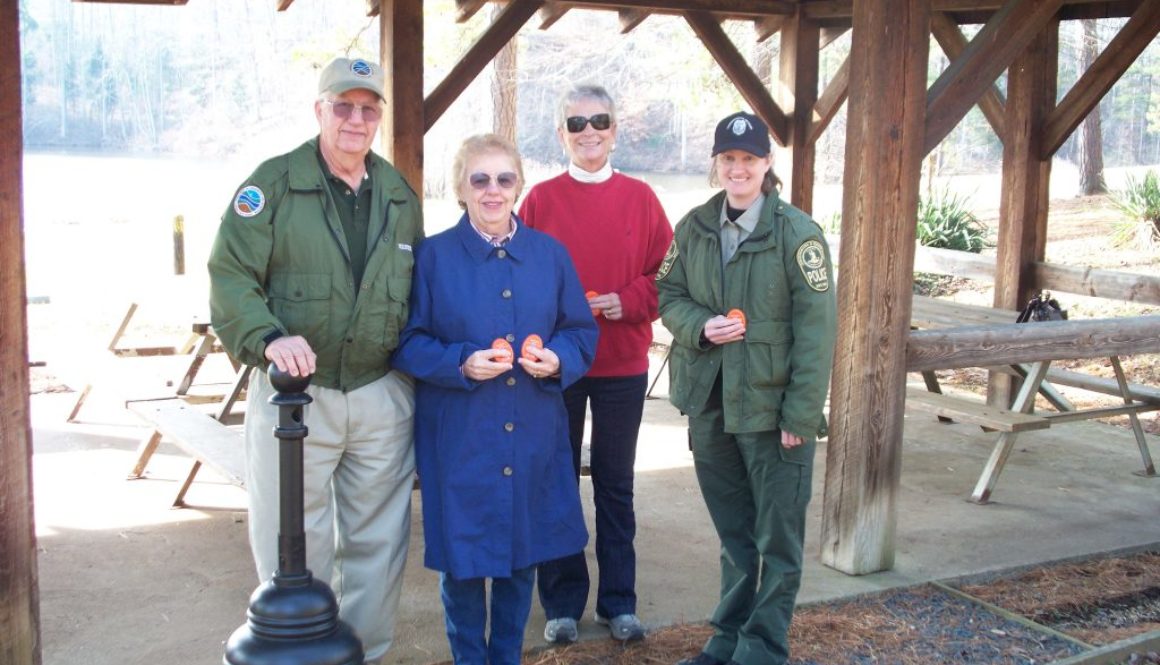
Holliday Lake State Park puts butts in their place with the help of KVB’s 30 in 30 grant!
The Friends of Holliday Lake State Park purchased two cigarette butt receptacles like the one seen in the picture to be put in high traffic areas of the park. In doing this they had hoped to reduce the number of butts found on the ground around the park. The containers were emptied regularly and a decrease in litter was noticed on the beach. The friends group also purchased 500 pocket ashtrays to give to park guests that are seen smoking so they would have a place to put their butts until they get to a trash can. These pocket ashtrays are very popular among trail users as a place to put their butts until they finish their hike. The large receptacles worked so well that the park purchased two more to be put at their new campground restroom entrances. “Thanks to KVB for allowing us this opportunity to help keep Virginia clean.”
On December 17, 1903, Wilbur and Orville Wright flew the first powered flight in an aircraft. They took the Wright Flyer to a height of 10 feet and flew 852 feet at a speed of about 7 miles per hour. Little did they know…
About 20 years later, in 1923, Lieutenants Oakley Kelly and John Macready of the Army Air Service made the first non-stop coast-to-coast flight in the United States. They flew from New York to San Diego. They made the flight in a little over a day.
In 1942, a little less than 20 years after the flight of Kelly and Macready, Howard Hughes made a trip from Newark, New Jersey to Los Angeles, California. He was a little speedier. The daylong flight of 20 years earlier took Hughes about 7½ hours.
Five years later, West Virginia native Chuck Yeager flew the Glamorous Glennis faster than the speed of sound. At 70,140 feet, he became the fastest pilot with the highest achieved altitude in history.
In 1957, the Soviet Union launched Sputnik, the world’s first satellite. They followed it four years later by sending Yuri Gagarin into space. By the end of the 1960’s, we had put a man on the moon.
20 years after manned spaceflight, Bryan Allen took one small step backwards. He took off, completed a figure-8 course, and landed in an aircraft that he piloted, and was powered by…him. A bicycle enthusiast, Allen pedaled his way into history. He later pedaled a similar aircraft across the English Channel.
All of this brings us to the dreams of one Bertrand Piccard. First, though, you need to understand his family tree.
Piccard’s father was Jacques Piccard. He was a noted engineer who took the design for high altitude balloons and sent them in another direction. His Trieste reached the bottom of the Challenger Deep, the deepest part of the Mariana Trench. He and Don Walsh of the United States Navy were the only men to have seen the Deep, and the Trieste remains the only manned vehicle to have made the trip. It was seven miles beneath the surface of the ocean.
Jacques may have gotten the bug from HIS father. Auguste Piccard was a physics professor with a thing for balloons. Auguste and his twin brother Jean Felix designed a pressurized capsule that would allow them to travel higher than anyone had ever been in a balloon. In the 1930’s he travelled to 75,459 feet. He became the first man to see for himself the curvature of the earth.
All of this comes back to Bertrand. In 1999 he piloted the Breitling Orbiter (have you seen Jetman? Those Breitling guys have a thing for flight!) in the first around-the-world continuous balloon flight. His latest fancy of flight is the Solar Impulse. It is a solar-powered aircraft and his goal is to fly it non-stop around the world. It uses solar technology, the latest battery technology, and physics to be able to gather energy when needed, expend it when needed, and store it for when needed.
Clouds? Still flying. Night? Still flying.
He’s already managed to keep the thing aloft for over 26 hours (about the length of time for the first American cross-country flight in 1923). And his vision is quite simple. To “demonstrate that progress is possible using clean energy”.
Bertrand likes to point out that his goal will not be achieved overnight.
When you look at the milestones of aviation, huge leaps were made over the span of about 20 years. From the Wright Brothers to Howard Hughes to Chuck Yeager to Yuri Gagarin. Giant leaps for mankind.
What Bertrand Piccard is doing does not require a new energy source. Solar has been around for years. He isn’t even the first to have flown a solar-powered aircraft. What is perhaps more important, is what he is doing for clean energy. We’ve waited more than 20 years for his flight.
Isn’t it time for clean energy to make the giant leap from Jules Verne fantasy to business-class normal?
Southwest Piedmont VA Master Naturalist Chapter Reports in on their 30 in 30 Grant
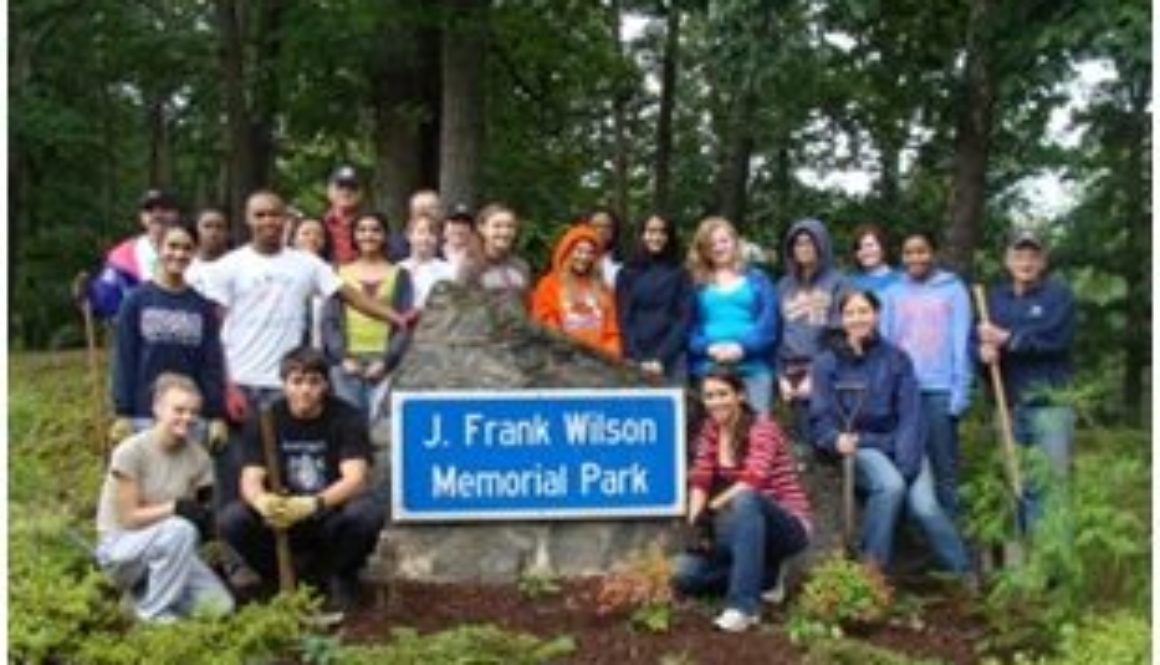
Thanks to the KVB grant and a community volunteers, tremendous improvements have been made in J. Frank Wilson Memorial Park. Once considered an unsafe place for families, the stigma is slowly beginning to change as the park is restored to its natural beauty.
Over the past year, the primary focus of volunteer efforts were implementing natural and structural erosion control and the beautification of several areas that were very noticeable as visitors entered the park. Before control measures and beautification efforts began, we gathered a group of children from a local afterschool program to test the soil quality.
After several meetings with the local 4H extension officer, we drafted a landscape design for the layout of the bank, selected native shrubs and trees, and ordered 37.5 cubic yards of mulch to stabilize the bank. Next, we met with the Martinsville Director of Parks and Recreation and identified where each shrub and plant would be planted.
Planting was completed in two stages: during a summer camp for high school students in July and at a cleanup event in partnership with the International Coastal Cleanup event in September.
The first planting was completed during a summer camp for high school students. Approximately 15 students planted barberry shrubs and knockout roses, painted sign posts, removed graffiti, planted additional plants and spread mulch in a butterfly garden. The second stage of planting was held in conjunction with the International Coastal Cleanup event. Several of our partnering organizations (Rotary Club of Martinsville, Uptown Rotary Club, Bassett High School Interact Club, Friends of Wilson Park, and the Southwestern Piedmont Master Naturalists) came together to plant dogwood trees, barberry shrubs, spread mulch and remove trash. Forty-eight volunteers contributed to the endeavor and 270 pounds of debris was collected.