
RVA Clean Sweep cleans Manchester
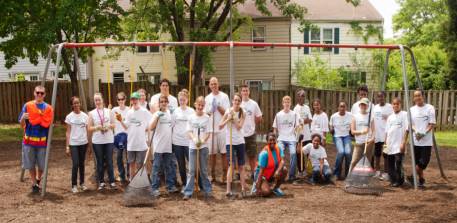
One of the 90 volunteers who came out to help clean up Manchester picks up trash by the river.
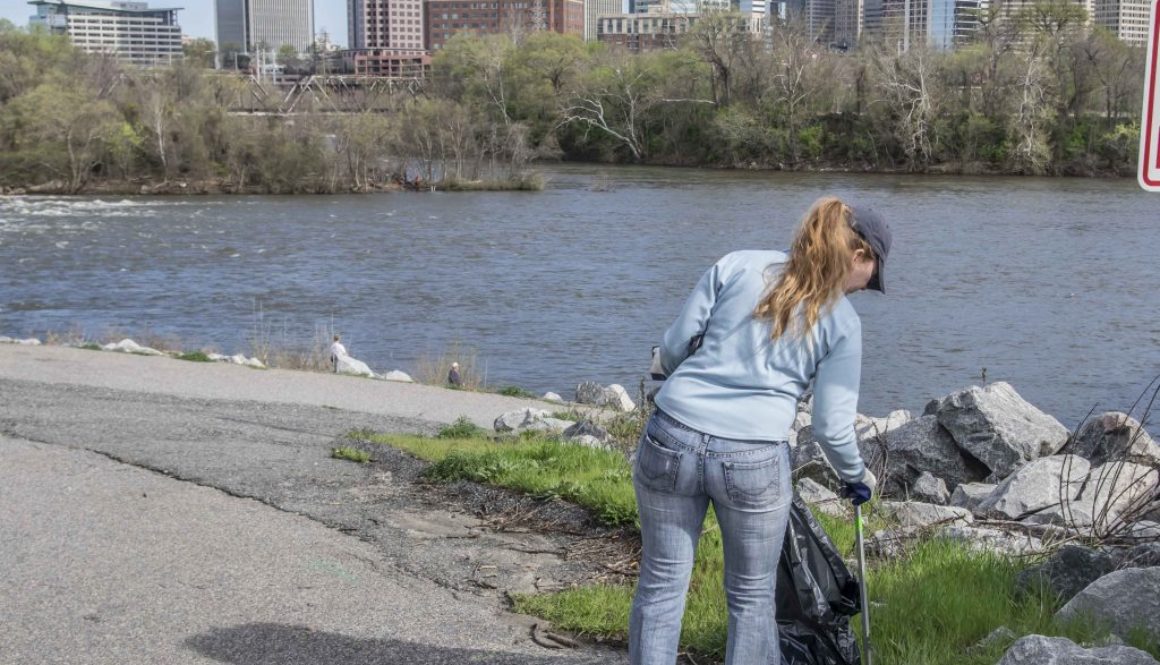
One of the 90 volunteers who came out to help clean up Manchester picks up trash by the river.
1970 was a transformational year. The Beatles released Let it Be, their last album together. Jimi Hendrix died, and Black Sabbath released their first album, introducing the world to heavy metal. Apollo 13 launched with astronauts Jim Lovell, Fred Haise, and Jack Swigert. Tom Hanks had just turned 14. While most of America was behind the wheel of a V-8 gas-guzzler, the American Motor Company decided to revolutionize the automotive industry with a bold new vehicle, the Gremlin. Keep Virginia Beautiful had been around for a whole 17 years.
1970 was also transformational for other reasons. While Black Sabbath unleashed a torrent of heavy metal on teenaged ears, actual heavy metals and other pollutants had been pouring into our environment for years, and something had to be done about it.
In 1969, while at a UNESCO conference in San Francisco, activist John McConnell suggested a Celebration of Earth, to be held on the first day of Spring for the Northern Hemisphere – March 21st. McConnell worked in plastics in the late 1930’s, and began to realize the effect this miracle substance could have on our Earth. He also was an advocate for peace and love, and in 1957 wrote an editorial called “Make Our Satellite A Symbol Of Hope.” His UNESCO suggestion was sanctioned by United Nations Secretary General U Thant, and on March 21st of 1970, San Francisco Mayor Joseph Alioto signed the first official American Earth Day Proclamation.
United States Senator Gaylord Nelson founded an April 22nd Earth Day to serve as an environmental teach-in, where academics and advocates could sit side-by-side and design solutions to the problems of pollution and litter. He was awarded the Presidential Medal of Freedom for his work.
That first Earth Day saw participants from over 12,000 schools, and hundreds of individual communities. All told, over 20 million people spent a day outside in sunshine, celebrating our Earth and making a commitment to work together to keep it clean and green. Today, hundreds of millions in almost 200 countries around the world will join in that celebration.
While Earth Day still actually falls on April 22nd, this Saturday, April 18th, groups and individuals across Virginia will venture outside to celebrate Spring and profess their love for a beautiful Commonwealth. More exciting to us is that from Tidewater, through Central Virginia, and into the mountains of Southwest Virginia, many of our Earth Day celebrations will be paired with a community greening, beautification, or cleanup project. Winchester is hosting an Earth Day Celebration and Community Shred where people can drop off paper for recycling. Staunton is selling native plants and giving away free tree saplings. Virginia Beach is offering programs about how you can green your life, and hosting it at Mount Trashmore.
Mount Trashmore, by the way, is an abandoned landfill. After decades of collecting detritus, in 1974 it opened as a city park. It has picnic areas, a skatepark (where some older skaters may be enjoying Black Sabbath), hiking trails, play areas, and two lakes. After remediation, many people have chosen the lakes as a favorite fishing spot.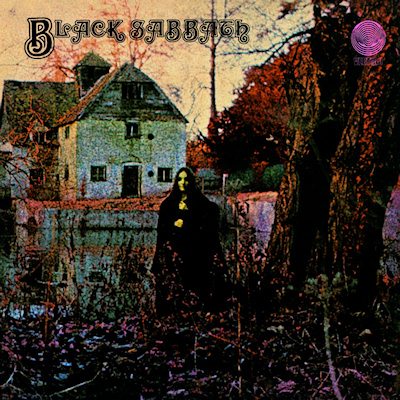
Our participation will be at Great Shiplock Park in Richmond. This site is on the James River, just below the city proper, and is the transition of the James from rapids to deepwater. At one time, people were discouraged from coming into contact with the river at this point due to the pollutants that made the journey from the James River headwaters. Today it is, like the lakes at Mount Trashmore, a favorite spot for anglers. This is our 22nd Earth Day event, and in true style, we’ll be performing a cleanup along the banks before we dive into music, food, frosty beverages, and hopefully a generous dose of sunshine.
After 60+ years of keeping Virginia beautiful, our work is still not done. And after 40+ years, we’re still not tired of celebrating Earth Day. In fact, we suggest you follow our example, and celebrate it every day.
We’re getting pretty close to the announcement of our first 2015 30 in Thirty Grant winner. Can you feel the excitement?
We started this in 2011, and have given over $90,000 to 120 winners. They’re large and small, public and private, and have been awarded between $500 and $1,000 towards their projects. No matter the size of their grant or the size of their organization, they share our commitment towards keeping Virginia beautiful.
So what have some of our past winners done with their grant money?
Lynnhaven River NOW helps to protect some of our waterways in Tidewater. They used their grant money to start an education program, telling the public about the danger and the dirty truth of what litter does to our aquatic life.
William Wetsel Middle School in Madison finished its rain garden with some additional trees and native plants. It has become an attractive environment for wildlife and an outdoor classroom.
The Virginia Aquarium encouraged visitors to think about the implications of their actions regarding cigarette butt litter by installing additional cigarette butt receptacles and educational signage. Addressing cigarette butt litter on the property is critical to the health of the marine environment because the Aquarium sits at the edge of a tidal waterway that connects directly to the Atlantic Ocean.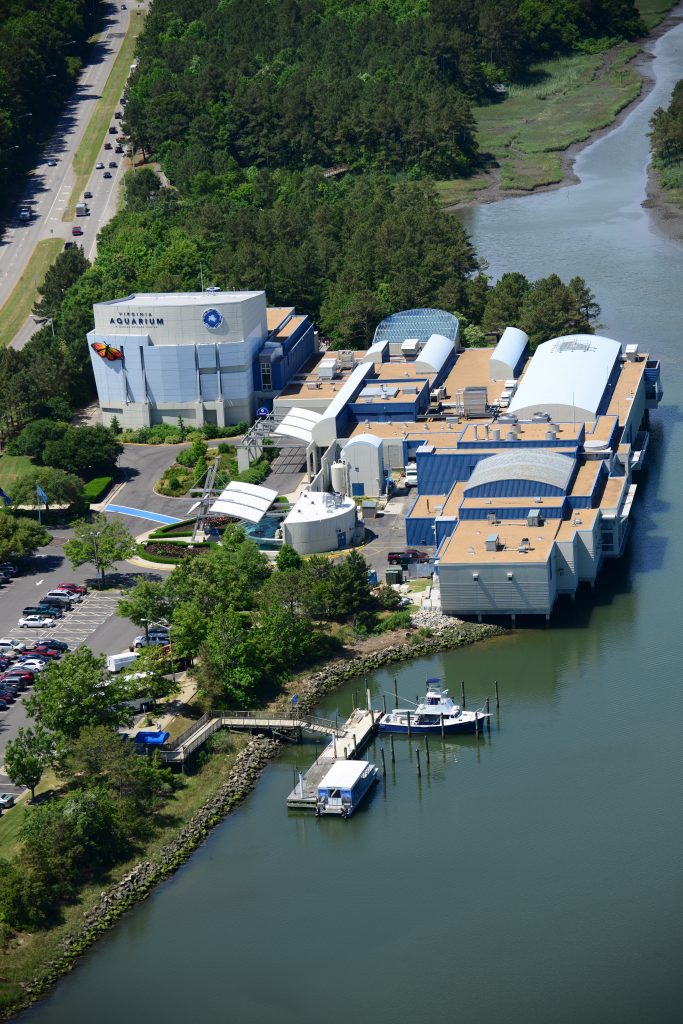
Service Kids in Progress earned a 30 in 30 grant for many reasons. First, they are an organization that gives to their community. Secondly, they get their youth community members to help their elderly community members. And finally, they believe in litter prevention and education. SKIP planned a community service day, in which the youth cleaned up the litter, leaves, and debris from the yards and neighborhoods of the elderly. We were proud to help enable this organization to purchase clean-up materials and help spread the word about their community event.
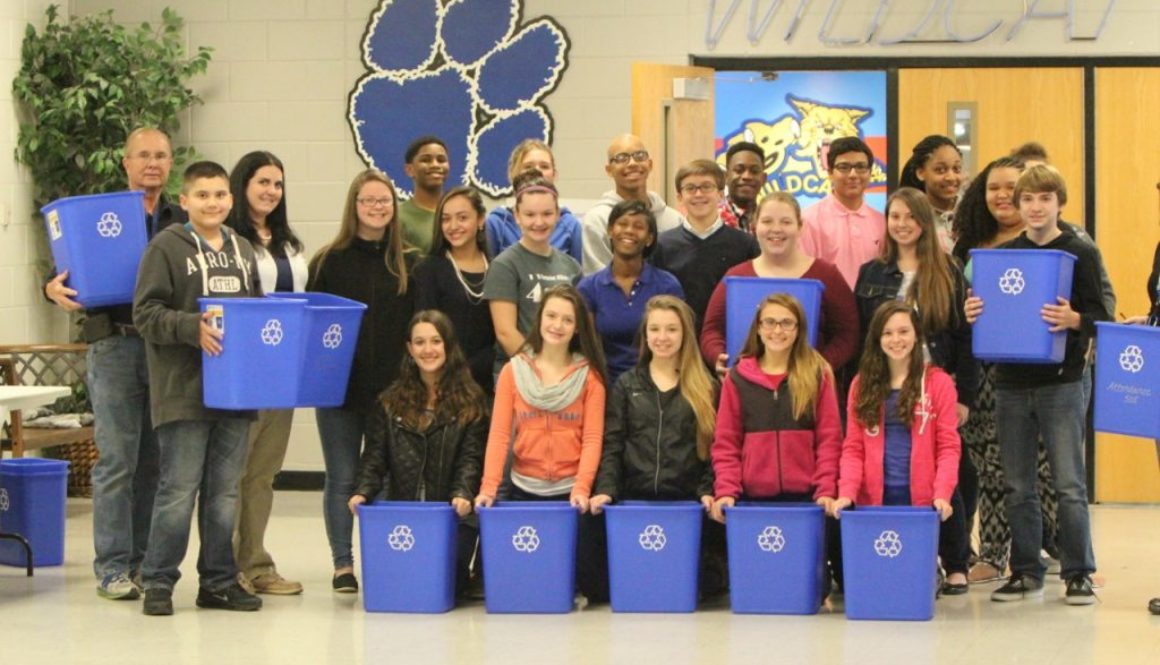
Hopewell City Public Schools wanted to put a recycle bin in every classroom in their 3 elementary schools, 1 middle school, 1 high school, and 1 learning center for pre-school and alternative education. The Hopewell schools know the value of recycling for the environment, but they also know the valuable lessons that it teaches their students. Positive recycling behaviors not only educate but also promote litter prevention, waste reduction, cleaner and greener habitats and community pride and awareness. We’ve no doubt they took these behaviors home and taught a thing or two to their parents.
The good news is that we had a record number of applicants for this year’s 30 in Thirty Grants. We also found two wonderful and generous partners in MeadWestvaco and Altria. The bad news is that it’s impossible for us to give every winner a grand. That’s where you can pitch in. Your donations help us to promote programs like recycling bins in classrooms, and education, and proper places for cigarette butts. Head over to our Donate page and find out how you can get involved. And watch out for this year’s class of 30 in Thirty winners!
“All work and no play makes Jack a dull boy.” Jack Torrance
Sometimes we get to combine work and pleasure. We’ll get to do that in June and again in October when we host two fantastic golf tournaments.
It can sometimes get depressing at Keep Virginia Beautiful. This April 22nd marks the 45th Anniversary of Earth Day, and our work is nowhere close to being done. People still throw trash out of their car windows. There is still litter in our streams and rivers. We could stand to see a few more flowers, trees, and public parks. Hopefully, some of our 30 in Thirty Grants will make an impact. In the meantime, we’ll count on you to make an impact, with the simple actions you take every day to keep Virginia beautiful.
“If you watch a game it’s fun. If you play it, it’s recreation. If you work at it, it’s golf.” Bob Hope
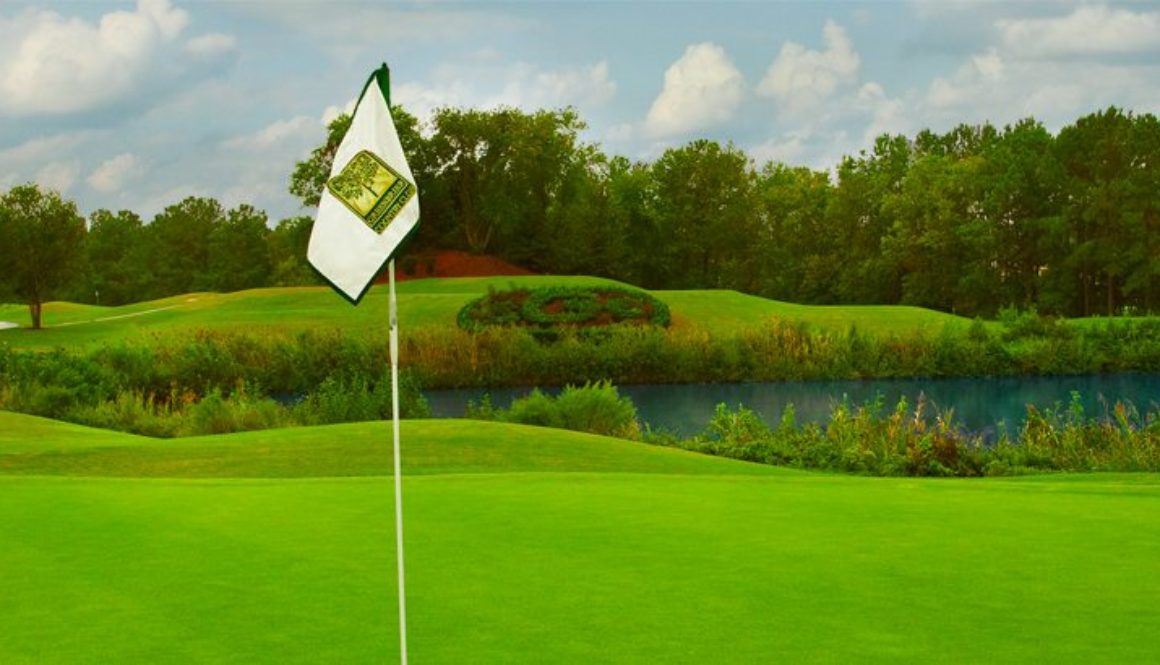
On June 8th, you’re invited to join us at Stonehenge Golf & Country Club on the outskirts of Richmond. This will be our 5th annual Keep Virginia Beautiful Golf Tournament. It’s a beautiful club with rolling hills, thick forests, fish-filled ponds, and great wildlife. With your registration, you’ll get lunch, frosty beverages on the course, and a delicious dinner. Prizes will be had.
“I guess there’s nothing that will get your mind off everything like golf. I have never been depressed enough to take up the game, but they say you get so sore at yourself you forget to hate your enemies.” Will Rogers
On October 12th, we’ll be at Greenbrier Country Club in Chesapeake for our Hampton Roads Golf Tournament. This is the second year for that tournament. Greenbrier is set up very similar to Stonehenge, but it’s just a few miles as the gull flies from Back Bay National Wildlife Refuge and False Cape State Park, so your chances of seeing ospreys, eagles, and shore birds is pretty good. Plus, you’ll get to play some golf. Again, you’ll get delicious food, frosty drinks, fabulous gifts and prizes, and the opportunity to brag about the birdie that got away.
Take some time this Spring and hit the range. Then hit the links with us. It’ll be fun and beautiful.

Often times what we do isn’t glamorous. We participate in trash cleanups. We dig in the dirt and plant flowers. We spread the message and find partners who help us to buy recycling bins and trash cans. We glare at drivers who toss their cigarette butts out the window. It isn’t always pretty trying to keep Virginia beautiful.
Our friends at Rocket Pop Media recently shared a video that reminded us that keeping Virginia beautiful is, however, often times a lot of fun. Enjoy.
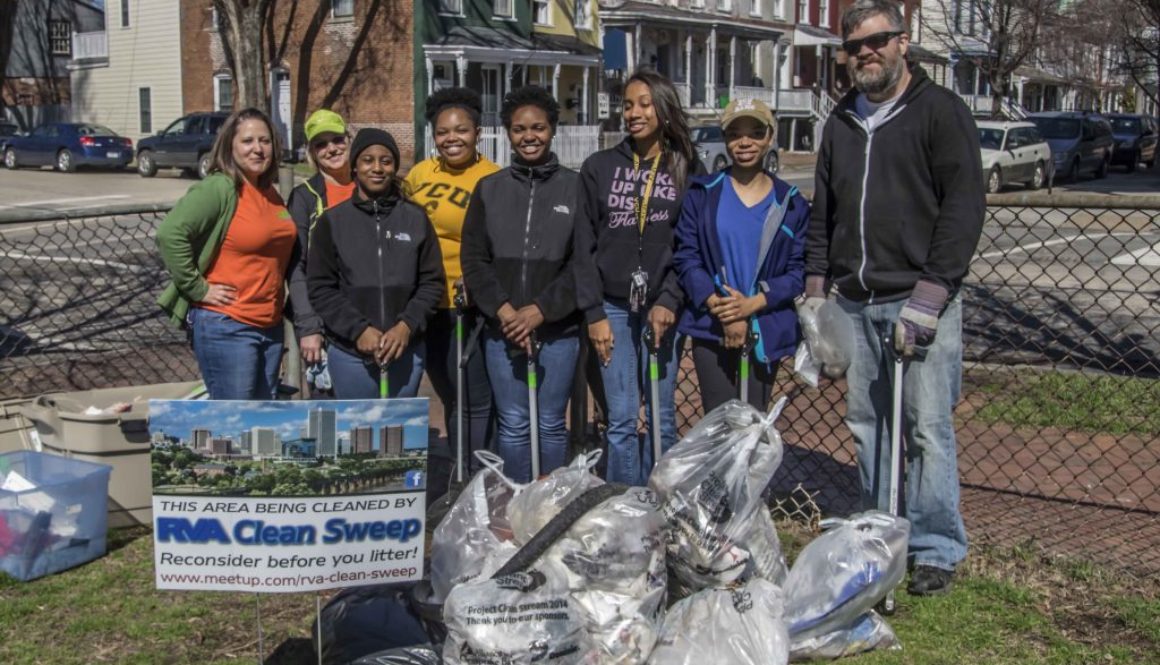
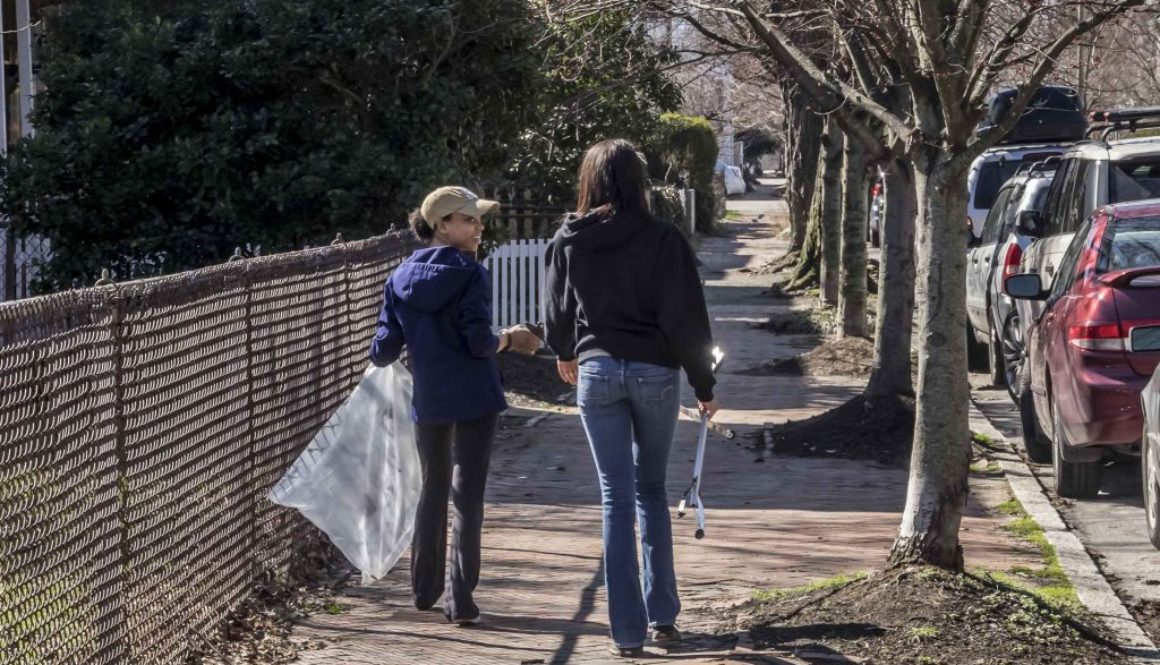
Members of RVA Clean Sweep clean the sidewalks and alleys in Oregon Hill
Keep Virginia Beautiful is proud to bring back our very successful and highly anticipated “30 Grants in 30 Days” program. The application period is now closed. Our first winner will be announced on Earth Day, April 22nd. Since 2011, we have provided over $90,000 to 120 organizations. We would like to thank our generous sponsors for 2015, Altria and MeadWestvaco. Without them, these grants would not be possible!
The 2015 “30 Grants in 30 Days” program is designed to help communities, schools, parks, neighborhoods, and civic groups battle Virginia’s environmental issues on the front lines. These grants are categorized in 3 areas – Litter Prevention, Recycling, and Beautification & Community Greening. Thirty grants of $500 to $1,000 will be awarded to 30 geographically diverse areas around the Commonwealth. These grants will be awarded for 30 consecutive days starting on Earth Day (April 22, 2015). Please visit our 30 in 30 page to find out more information. If you have questions about the program or process, please contact Beckey Watson.
Important Dates:
Application Deadline: April 3, 2015
Applicants Notified: Starting April 20, 2015
Winners Announced Daily: April 22 thru May 21, 2015
Grant Projected Completed By: October 31, 2015
Results Reported By: November 15, 2015

We generally like to eat organic and sustainable stuff. You know – keep it green. But sometimes we feel like a splurge. During the month of March, a Richmond-area restaurant is helping us do just that, and you can come too!
Sedona Taphouse in Midlothian, Virginia is helping us to raise money with Steak Out for Charity. If you’ve not been, Sedona Taphouse (they also have one in Charlottesville) has a fantastic atmosphere, a delicious menu, and over 500 craft beers. You can learn more about them on their website and on Facebook. So here’s how it works:
Just so you know, it’s only good for dine-in – not take-out. You have to order a beverage, and only one savory steak per person. And please remember that your server is giving you a $16 steak’s worth of service for six bucks. So tip them like you spent the 16. And remember also, there are five Mondays in March this year. Their address is
15732 WC Main Street
Westchester Commons
Midlothian, VA 23113
Sedona Taphouse is pretty psyched to be able to do their small part to help keep Virginia beautiful. And we’re lucky to have folks like them who are willing to jump in and help us out. So, thank you to them. Now it’s time to do your part. Bring your appetite.
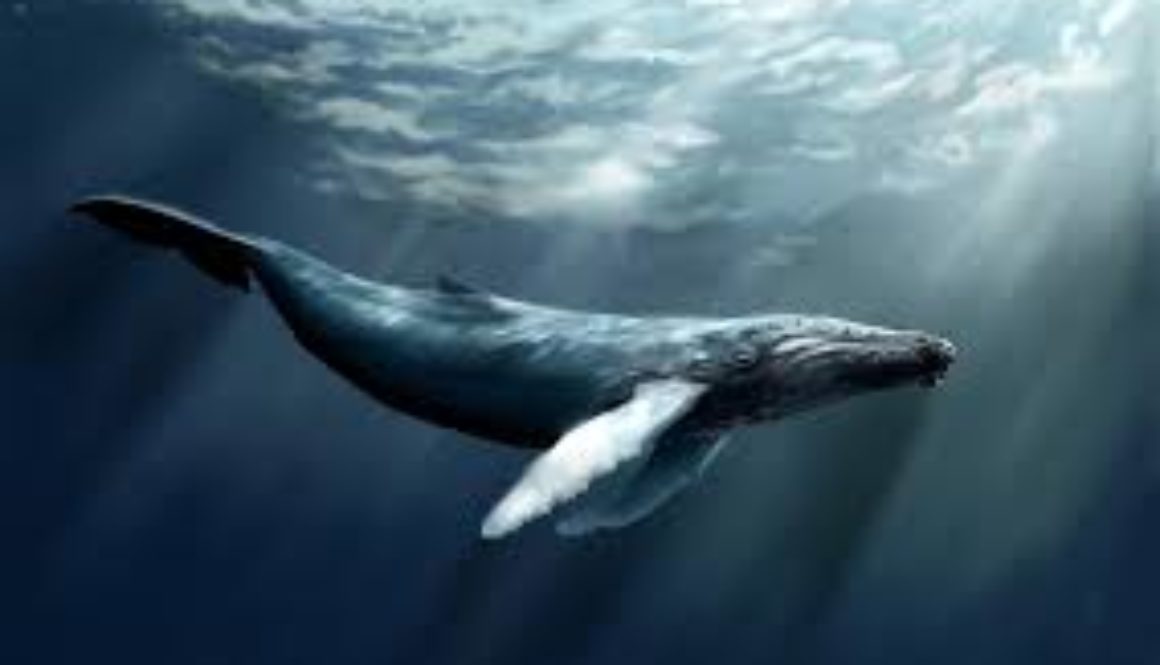
Scientists from Woods Hole Oceanographic Institution study whales. One way that they do this is by studying the singing of the animals – their sonic signature. Each whale has one that is somewhat unique, and the frequency of the call can help identify what species of whale they’re listening to.
In 1989, they heard the plaintive call of a whale at 52-hertz. This was unusual. None of the whales in their database called at 52-hertz, and they were unaware of a species that regularly sang at that frequency. They heard it again in 1990, 1991, and almost every year after that. They know that it swims from the Aleutian Islands of Alaska, down to the California coast, and then back again. They also know that – unlike their other whales – “52” swims alone.
When you consider the fact that whales sing to communicate, and a whale song can travel almost 3,000 miles through the water, “52” may be the loneliest whale in the world.
Around a year ago, different sorts of scientists near Cody, Wyoming, managed to attach a radio collar to a young Gray Wolf, who became known as “Echo.” Echo traveled down the Rocky Mountains and into Grand Canyon National Park in Arizona. In addition to being a daunting 750-mile journey, Echo was the first Gray Wolf seen in the Grand Canyon since at least the 1940’s. Perhaps she was the loneliest wolf?
A few weeks ago, a hunter mistook Echo for a coyote and shot her.
At one point in America’s history, one out of every four birds flying our skies was an Ectopistes migratoius, or Passenger Pigeon. Slightly larger than a mourning dove, it was fast and maneuverable, with bright red markings. It was said that flocks contained so many birds that they blocked out the sun, and when they roosted at night the weight of the flocks would break the tree branches upon which they sat. In the early 1800’s, our expansion westward reduced their habitat, and their huge numbers made them a plentiful food source, so we hunted them. On September 1, 1914, the Cincinnati Zoo announced the death of “Martha,” their Passenger Pigeon. She was the last of her kind.
All of this made us imagine what it must be like to be the “last one.” Like Will Smith in Legend. No one else to talk to. No one else to share with.
The thing is, losing a single species has a tremendous impact. Each animal and creature serves a purpose. Big fish eat little fish and the world keeps spinning on greased grooves (a sentiment John Steinbeck would’ve appreciated). Granted, there are nuisance animals that we would rather not see (think: mosquito). As someone who grew up with farmers, I can vouch that my family would be perfectly content to never see another groundhog.
But here’s how it works: Talk to farmers and recreational gardeners today, and conversation will ultimately come around to deer. They’re everywhere. The eat crops, nosh on gardenias, and eliminate forest seedlings. Why are they such a problem? Because we’ve successfully eliminated almost all of their natural predators.
The other issue is the health of the few remaining members of these vulnerable species. There’s a pride of lions that live in the Ngorongoro Crater in Tanzania. This is an area in a dormant volcanic cauldron that’s virtually cut off from the rest of Africa. Like creatures of Madagascar, the animals in Ngorongoro have developed separate from their outside relatives. This lack of diversity has caused inbreeding and disease, and today they number around 75. When they’re gone, they’re gone.
And it isn’t just the animals. Throughout the Appalachians miners use a process called “mountaintop removal” to get at the coal buried beneath the ancient hilltops. The first step is the removal of all of the trees. When they’ve gathered their coal, they replant the flattened spine of the mountains, but they use highland grasses and evergreens, because they’re cheap and grow faster. This certainly helps to bring these areas back to “green,” but it doesn’t replace those old-growth forests of oak, elm, and maples. The mountains of the Appalachians are among the most biologically diverse in the world. They’re like the Rain Forest of North America. This is due in large part to the long-term geologic stability of the mountain range. And in a few years we’ve managed to screw it up.
Remember, when they’re gone, they’re gone. Don’t let them get lonely.