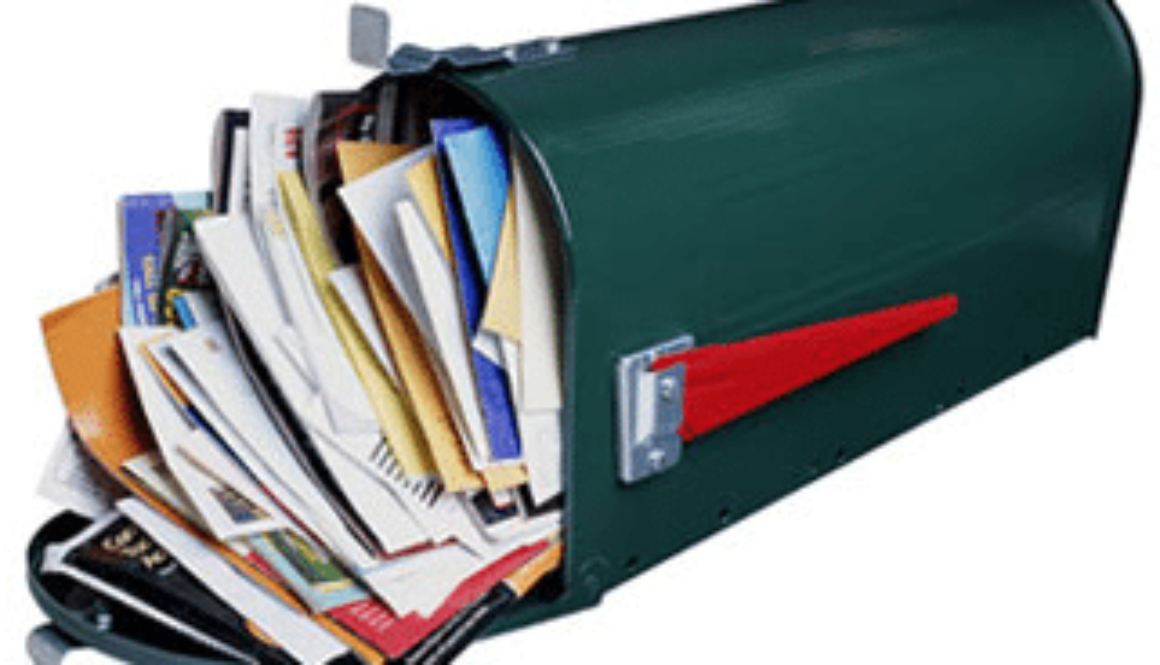
Did you know the average American household receives 1.5 trees worth of junk mail each year? Unnecessary mailings clutter our mailboxes and our lives. According to the United States Postal Service, advertising mail accounts for 59% of all mail Americans receive. Most of that junk mail is never even opened!
Fortunately there are ways to give your mailbox a makeover by changing the type of mail you receive. For $1 you can fill out an online form at DMA Choice which will let 3,600 different organizations know that you are not interested in their junk mail. Catalogs can also be a wasteful nuisance. Go to the Catalog Choice website and register for FREE to opt out of mailings. Remember, you can find the same information by going paperless and checking out your favorite catalog’s website. Phone books also consume a great deal of paper. If you don’t use your phone books visit Yellow Pages Opt Out to stop delivery and the next time you need a phone number, look it up online.
What should you do with the junk mail you received today? Recycle it! Even the plastic window envelopes can go into the recycling bin. You can also reuse your junk mail. Shred it and use it as mulch for your garden, line your pet’s cage or make paper mache. Shredded paper is also a great recycled packing material!
If you are sick of receiving annoying junk mail make sure you register today to do your part to save paper and go green!
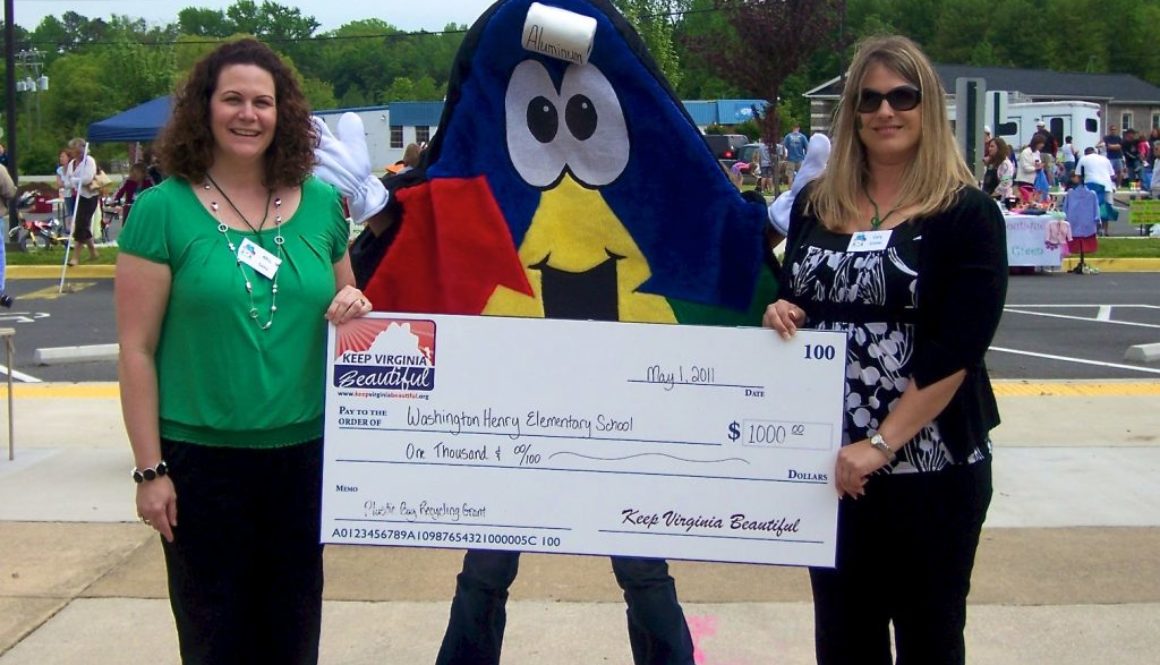
Washington Henry Elementary School has been awarded a $1,000 grant in the Plastic Bag Recycling Category. Washington Henry Elementary School (WHES) is a bright “green” spot in Hanover County and has been the starting point for many “green” projects, initiatives, and events. WHES realizes the importance of educating its community about plastic bag recycling and the need for reusable bags as the permanent long term solution to decrease the plastic bag waste stream and litter problem. Their goal is to use the grant funds for a fall community clean-up event and the production of hundreds of canvas reusable bags, with a simple message of reduce, reuse, and recycle. For more information about Washington Henry Elementary School or their project, please contact Cary Crone at 804-212-7671.
The KVB grant program focuses greater resources and attention on individual localities throughout the Commonwealth and how they are addressing the issues of litter prevention, recycling, waste reduction, beautification and education. KVB provided the opportunity for government, non-profit and/or service organizations in Virginia to apply for one of (30) $1,000 grants in three different categories: 10 grants for plastic bag reduction and recycling, 10 grants for cigarette litter prevention, and 10 grants for community greening and beautification. These grants are made possible by KVB’s partners, Walmart and Waste Management.
The mission at Keep Virginia Beautiful is to engage and unite Virginians to improve our natural and scenic environment. Our goals include becoming the leading statewide voice, providing a framework for improved communication and collaboration, cultivating and supporting sustainable programs, and engaging citizens by linking them to volunteer opportunities and information through these 5 impact areas: Litter Prevention, Waste Reduction, Recycling,Beautification, and Environmental Education.
I recently had an interesting exchange with my mother about my interest in Keep Virginia Beautiful, why we recycle, and the Green Movement. We talked about our family and the way things used to be:
Her town was like many and had a local milk man. You left empty bottles on your doorstep and fresh bottles of wholesome milk magically appeared the next morning. I can remember being a child and taking soda bottles to the grocery and grabbing an ice cold soda out of a cooler full of chipped ice. Seems that all of these bottles were taken back to the plants, washed, sanitized and put back into use. Talk about recycling.
I have a candle that promises the aroma of “fresh linen”. I knew laundry day at my great grandmother’s house from the sheets and overalls hanging from the line off of her back porch. My cousin still lives in the house and we marvel at the hand-cranked washer that Mamaw used until her death. The dryer was solar and wind powered. I wonder what her EnergyStar rating would have been?
Back in Mamaw’s day they didn’t have gym memberships. They walked. They walked to the neighbor for coffee, they walked to town for the latest Sears catalog. They used the catalog to buy the latest rotary mower (a truly green machine; no motor) which they pushed across the yard because the goats were getting into the neighbor’s flowers. Green transportation at its best.
When the mower arrived it was packed in newspaper from a city far, far away from rural Virginia. None of that fancy bubble wrap or styrofoam peanuts.
They didn’t need a fancy GPS or an iPhone to order dinner because having a meal delivered meant that someone stopped at the chicken coop on their way back to the house. One electrical outlet per room and one television for the house. A television with a screen the size of a pie tin. Remember those? A little metal pan that you could use for making desserts with fresh blackberries that you picked up on your walk back from the Sears outlet in town. Then you washed it and made some more.
My great grandmother didn’t have a green movement in her day. She didn’t need one.
“A Bag’s Life” Creates Buzz at America Recycles Day at VA Capitol
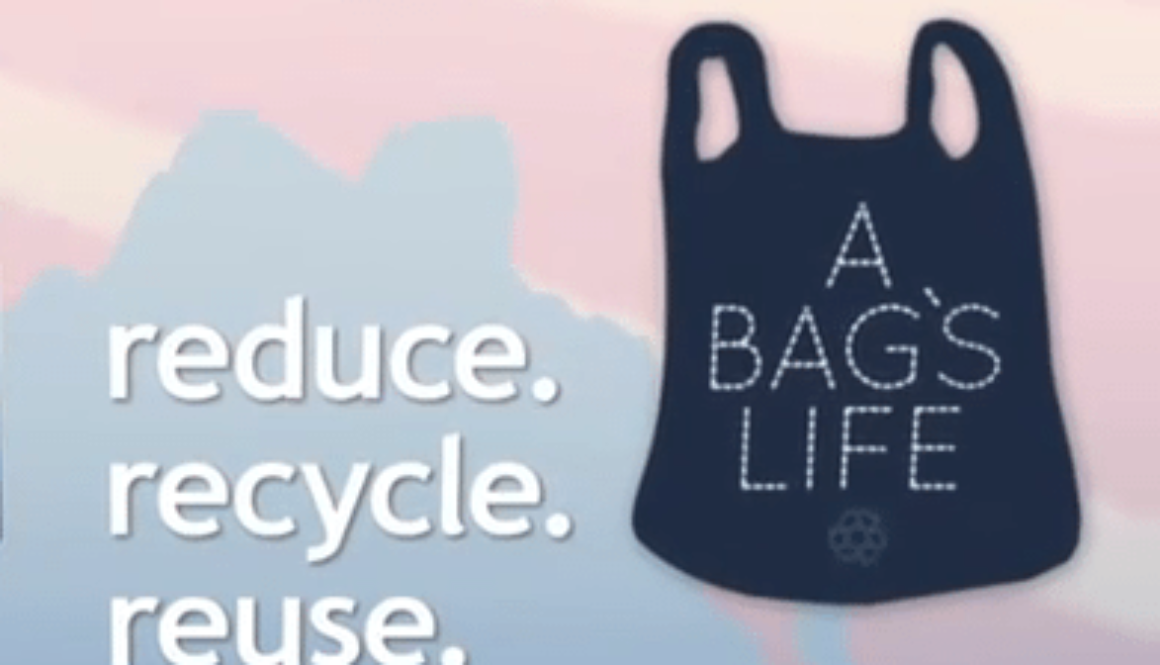
(Richmond, VA) – Nov. 15, 2010 – A statewide plastic bag recycling awareness campaign in Virginia called A Bag’s Life, which includes an interactive and educational website (www.abagslife.com/VA), mobile app with nearly 800 drop-off sites by zip code, and video contest was launched today during America Recycles Day at the Capitol. Keep Virginia Beautiful (KVB),Virginia Retail Federation (VRF), Virginia Recycling Association (VRA), American Chemistry Council (ACC), VA Department of Environmental Quality, and the Office of the Secretary of Natural Resources were among those in the public-private partnership who kicked off the program.
A Bag’s Life, through quirky messaging like “Don’t treat me like trash,” and “Gimme a second chance,” encourages Virginians to reduce, recycle and reuse their free grocery bags. It also reminds consumers that other bags like those used for dry cleaning, newspapers and bread, as well as wraps used on products like paper towels or bottled water also can be dropped off at many retailers for recycling.
“America Recycles Day has been set aside as a day when we individually pledge to take extra steps to reduce waste and make recycling work at home and in our communities,” said Mike Baum, executive director of Keep Virginia Beautiful. “By taking the extra time to bring grocery bags back to the store to be recycled, people are giving that bag a second chance to be made into something else like outdoor decking, park benches, or even new bags. It’s a simple earth-friendly practice that can yield tremendous results.”
Margaret Ballard, vice president, Advocacy for the Virginia Retail Federation, noted that while plastic bag recycling programs are not new to Virginia, a statewide educational initiative that partners public and private groups toward the common goal of recycling plastic bags is unique. The VRF was instrumental in obtaining state funding for the first Plastic Bag Recycling project in the state — in Isle of Wight County. Isle be Green was kicked off in September 2009, and to date more than 1 million plastic bags have been recycled in the county. Nationwide, plastic bag recycling is on the rise, with more than 832 million pounds recycled in 2008.
“Retailers across Virginia are well aware of the impact plastic bag litter has on our roadways and agricultural environment in Virginia,” said Margaret Ballard, vice president, Advocacy, Virginia Retail Federation. “That’s why nearly 800 retail stores are offering their locations to consumers as drop-off sites to recycle these bags. Recycling not only helps clean up plastic bag litter, but supports economic resources for our Virginia-based partners like Trex, the Winchester-based manufacturer of plastic building materials.”
Trex joined in the A Bag’s Life Virginia launch, as well as Hilex Poly, a plastic bag manufacturer with facilities in Richmond.
A Bag’s Life also includes a video contest and social networking element to fire up support for recycling. The easy to use recycle location finder lists the nearest drop-off points and the Google Maps option makes recycling plastic bags and wraps easier than ever before. The plastic bag icon on the website is designed to take on a life of its own, smiling when it’s happy, frowning when it’s not. Website copy suggests that individuals should step up and do their part to address litter and waste rather than blame the bag if it’s not being recycled or reused.
About A Bag’s Life in Virginia
A Bag’s Life is a public educational campaign that unites non-profits, business, community and government organizations around the common goal of promoting the three R’s as they relate to plastic bags — reduce, reuse and recycle. Partners include: Keep Virginia Beautiful, the Department of Environmental Quality, Virginia Retail Federation, Virginia Recycling Association, Trex and the American Chemistry Council. For more information visit www.abagslife.com/VA
How will you give Mother Nature a little love in 2011? The time is now. How can you help?
1. Cut down on trash
Estimates suggest that up to 90% of the contents of our bins could actually be reused or recycled. What could you reuse? What could you recycle? On average, American’s throw away about 3.5 pounds of trash each day! Yikes.
2. Cut down on pollution
According to The Daily Green Americans generate 30 billion foam cups, 220 million tires, and 1.8 billion disposable diapers every year. Did you really need to save 50 cents by buying the Styrofoam cups instead of the paper cups?
3. Cut down on water waste
Over the course of a year, we waste 4 gallons of water just by running the water while we brush our teeth! Some experts estimate that more than 50 percent of landscape water use goes to waste because of evaporation or runoff caused by over-watering.
4. Reduce electricity consumption
Refrigerators account for about 20 percent of household electricity use. If you set it on 37 degrees and your freezer as close to 3 degrees and you’ll cut that figure drastically. Another simple step…set your dishwasher to air dry rather than heat and you’ll save 20 percent of your dishwasher’s total electricity use.
5. Recycle
If every American household recycled just one out of every ten HDPE bottles they used, we’d keep 200 million pounds of the plastic out of landfills every year. Recycling one aluminum can saves enough energy to run a 100-watt bulb for 20 hours, a computer for 3 hours, or a TV for 2 hours. (EPA, 2008)
6. Buy eco friendly products
How many brown paper lunch bags do you and your kids use every year? And what about all of those little plastic sandwich and snack bags? How about replacing those with a one time purchase that will not end up in a landfill? Check out these Eco-Friendly Insulated Lunch Bags from GreenSmart. Or these super fun designs for your kids that have individual containers inside the lunch box from Obentec.
7. Give back to nature
Here’s an obvious way…plant a tree. But did you know that you can easily donate to a nature-related organization with your license plate purchase? Check out these license plates and choose a wildlife or environmental organization with a designated license plate. A donation is sent to that organization each year you renew the plates.
8. Buy local
It may seem like a no-brainer to many of you, but it’s easy to forget that shopping local, can benefit your impact on Mother Nature in numerous ways. Shopping locally will stimulate your local economy, however it also eliminates the need for fuel-guzzling transportation. An average fresh food item on our dinner table travels 1,500 miles to get there. Buying locally produced food eliminates the need for all that travel.
Local farmers are often less dependent on pesticides and insecticides and less likely to use nitrogen-based fertilizers in the overwhelming quantities that mass producers use. In other words, the environmental impacts of shopping locally will most definitely effect Mother Nature in the near and long-term.
9. Cut down on air pollution
We make choices everyday that can help reduce air pollution. Walk to work or drive? Paint with water-based paints verses oil or varnishes. Use a solid deodorant rather than an aerosol. I bet you can think of a few too….
10. Educate Others
Share what you learn along the path of living a greener life. Instill these values in your children, friends, family and colleagues.
 Most of that junk mail is never even opened!
 a phone number, look it up online.