
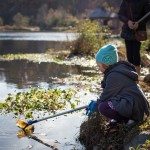
Kayaker cleaning up island
I caught this kayaker taking a break to clean up trash on an island in the James River in downtown Richmond.
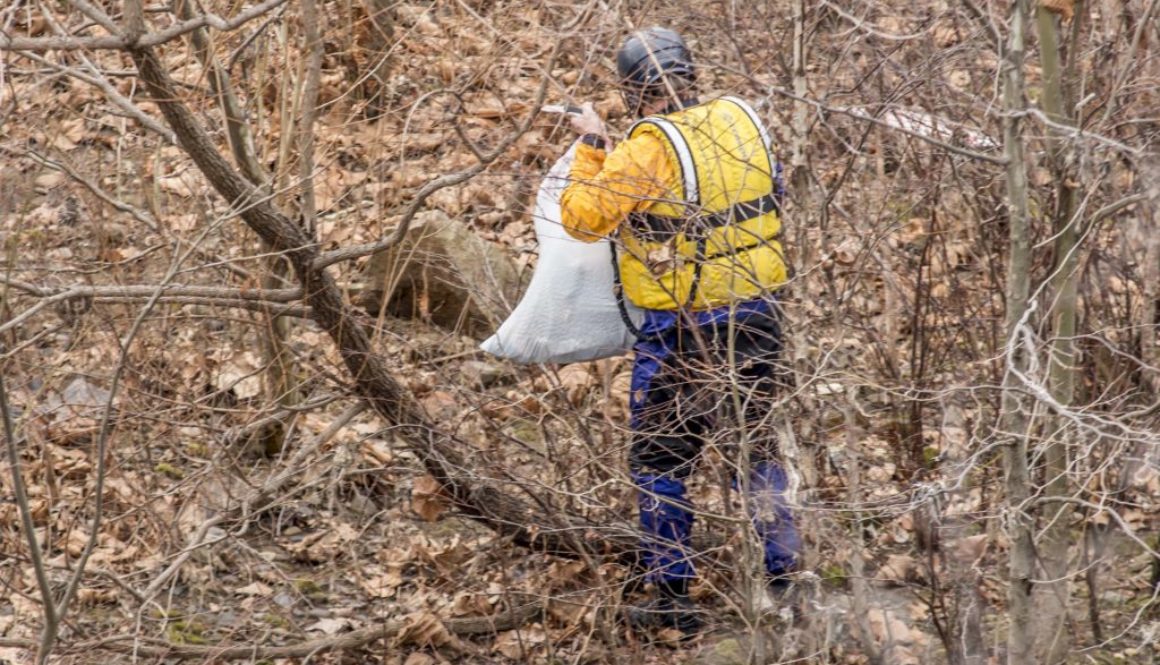
I caught this kayaker taking a break to clean up trash on an island in the James River in downtown Richmond.
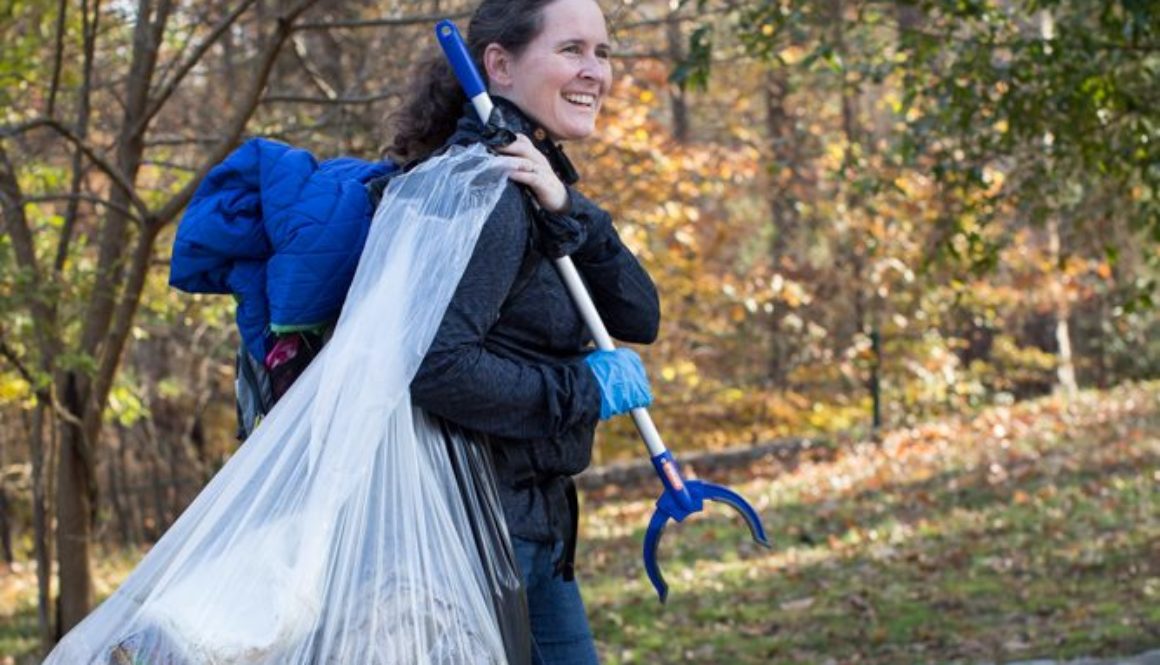
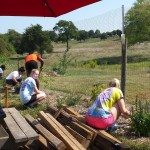
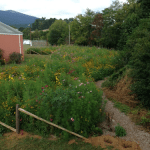
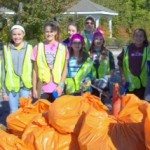
We’ve been fortunate over the past four years to be able to execute an ambitious program that offers a helping hand to groups and organizations who wish to do their part to keep Virginia beautiful. This program awards thirty grants over the course of 30 days for initiatives that address our impact areas of beautification, litter prevention, waste reduction, recycling, and education. To date, we’ve given over $90,000 to 120 recipients who’ve done remarkable things to preserve and protect our beautiful Commonwealth. They’ve created outdoor classrooms, installed rain gardens, planted community gardens, performed ambitious cleanup projects, and more.
2014 was no different, and thanks to the support of Keep America Beautiful and our willing partners Lowe’s Charitable and Education Foundation and MeadWestvaco, we were able to award another 30 grants this past fall. One of the stipulations of the grants is the willingness and ability to report on your work. The responses have begun to flood in, and we’re extremely proud of your efforts. You have:
In the end, concerned people just like you perform these beautiful acts. In reality, you care enough that this important work would’ve occurred with our without our support. You are the true heroes, and we applaud you. It was a great honor to lend a bit of financial support and allow your efforts to be a bit larger and stronger.
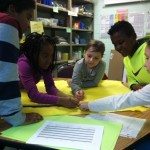
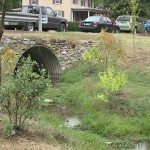
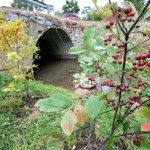

As you may know, part of our mission is to “engage and unite Virginians” to beautify our state and protect our environment. One of our impact areas is also education. Doing this relies heavily on what you do. Sometimes your efforts and ideas are the driving force behind doing good. And sometimes, the very best efforts and ideas come from our young people.
We recently got a note from a mother who had just discovered Keep Virginia Beautiful (better late than never). She said,
“Hello there Keep Virginia Beautiful,
I just wanted to send you a quick email on behalf of my daughter. This fall, my daughter Sarah started the fifth grade and she has always been interested in the earth and going green. For the past month, her class has been working on a project that has focused on recycling and going green in their own community. Her class began recycling in their classroom and school and Sarah insisted we step up our recycling game at home. We continue to do research weekly on how to be more sustainable at home. Our next step is to make our back yard more sustainable and we hope to create a large garden (with raised boxes for tomatoes) next summer and begin to compost.
Sarah and I have been looking up resources on the internet about recycling at home and in the classroom and she came across your page https://keepvirginiabeautiful.org/resources/online-tools/ . As a mother, I just wanted to personally thank you for making it. You have some great resources and kid friendly information.
Sarah wanted to send you back another page that she found about sustainability, recycling and going green in your own classroom. We thought you might want to add to your page because it could help you and others as well “Guide to Going Green at School”http://www.aaastateofplay.com/guide-to-going-green-at-school/
Would you consider adding it for her? I would love to surprise her and show her that her research will help others and pay off.
Thank you so much,
Jill”
You can now see Sarah’s contribution on our Resources page. Thank you, and keep up the good work.
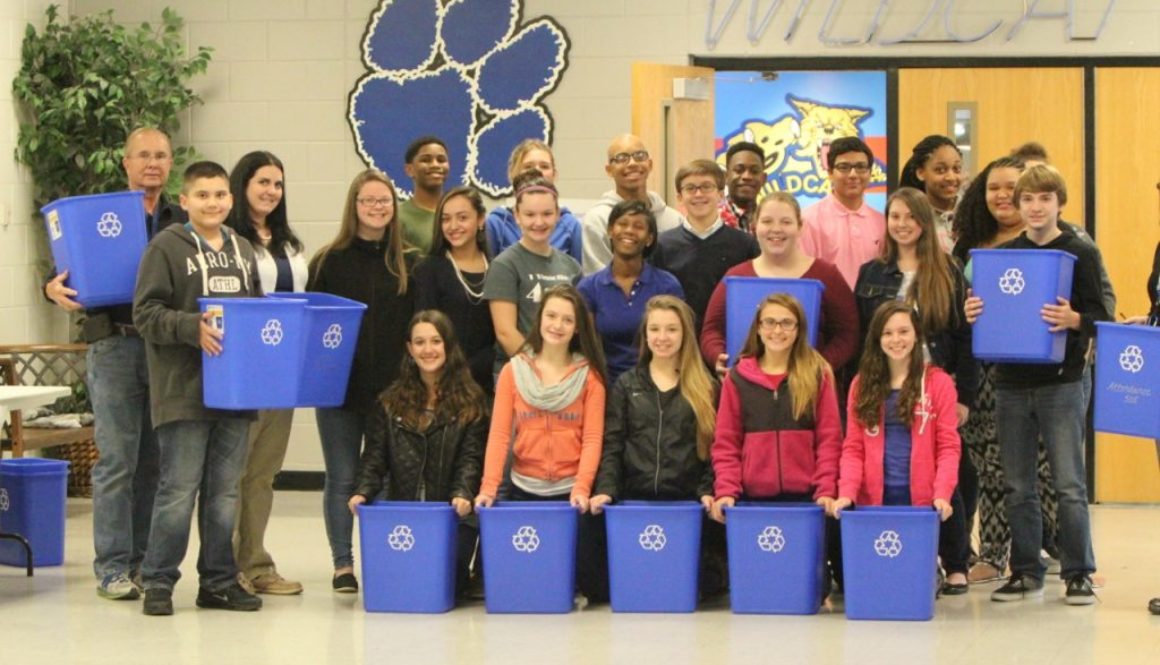
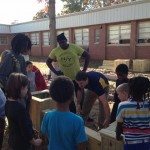
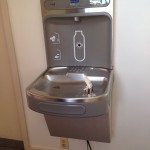
Eighth grade students and sponsors of Carter G. Woodson Middle School’s environmental and recycle team in Hopewell, VA, were excited to receive new containers to use in their recycle program.
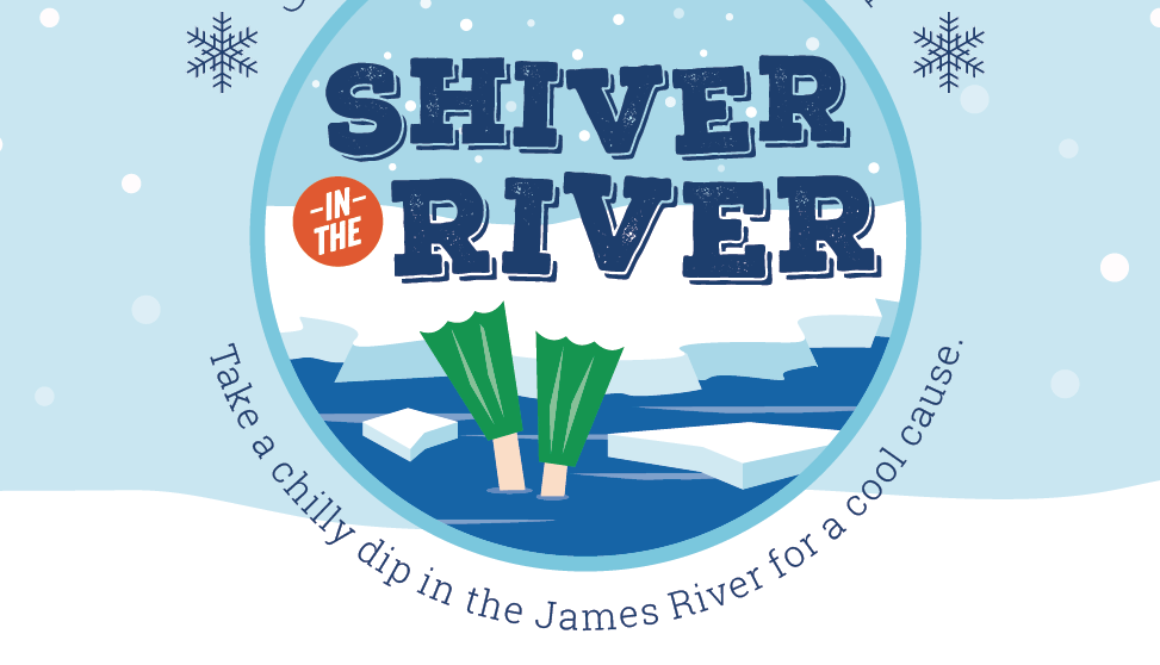
At the end of January, when it’s hopefully really, really cold, we’re going to gather up all of our friends and jump into the James River (and clean it up, too).
Really.
We want to invite you to participate in our first ever Shiver in the River. People gather, have fun, don silly costumes, take their dip in the water, and then have a huge party – all while raising funds for a great cause. After all, you don’t want to jump into a freezing river in January just for the heck of it. There should be some sort of reward.
So here’s what we’re going to do:
On January 31st, we’re going to meet near Historic Tredegar on the James in Richmond. The river is generally running lower in January, so we’ll have a unique opportunity to do some serious cleanup work on the riverbanks and surrounding areas. Every participant will Give60 minutes by gathering trash and recyleables. After an hour of cleaning, we’ll all make the James River Jump. To warm us up afterwards, we’ll join for a Keep Virginia Beautiful Winter Festival, with food, drink, music, games, and more. We’ll make a day of it. You can just come for the cleanup and/or the Jump, just join for the Winter Festival, or go in for the whole experience. To participate in the cleanup or the Jump, we ask that you gather at least $75 in pledges to help us Keep Virginia Beautiful and earn cool incentives.
By the way: The Winter Festival portion will feature heated tents. Just saying.
You can learn more about the Shiver in the River, register yourself, or enlist your team by going to the Shiver in the River website. Don’t forget to like our Shiver in the River Facebook Page to get the latest Shiver in the River news.

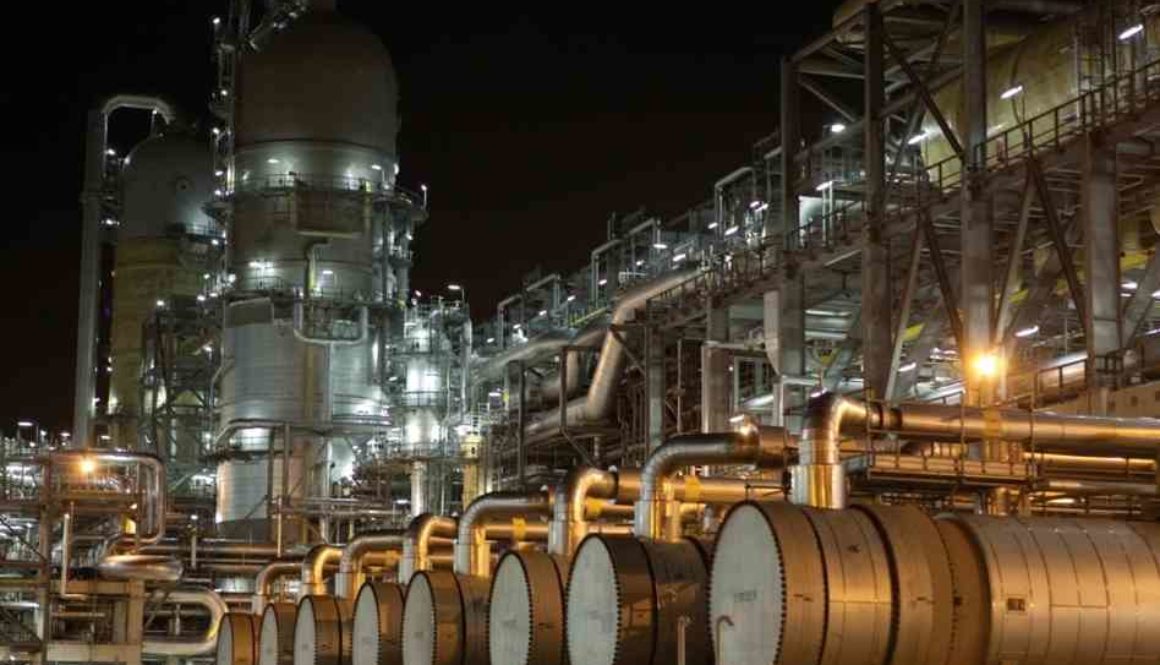
On December 2nd of 1984, residents of the central Indian city of Bhopal were nestled snugly in their beds. Animals had been put in for the night, and several hundred thousand men, women, and children were content in their dreams.
As they slept, water began to backflow into a pipe leading to a storage tank at the Union Carbide India Limited pesticide plant. The tank contained 42 tons of methyl isocyanate (MIC), an ingredient in pesticides and the production of adhesives. Exposure to the compound is considered toxic, and can damage the lungs, sinus tissues, and even burn the skin.
The introduction of water to this tank caused a thermal reaction that released around 32 metric tons of MIC into the immediate atmosphere in under an hour. Due to its nature, it didn’t rise into the atmosphere, but lingered close to the ground, like a deadly fog. It rolled silently through the sleeping city, where over 600,000 people were exposed to the gassy cloud. By the following morning, thousands of people had died. Over 170,000 were treated at local hospitals, and over 2,000 dead livestock animals were buried or burned. Trees and plants began to die, and farmers were advised to not eat their crops. Estimates of the final death toll vary, but it’s estimated that almost 10,000 died from the immediate event, and an additional 8-10,000 have perished from residual effects.
Thirty years later, the accident at Bhopal continues to cause death, disease, and birth defects.
While that disaster is the largest in history, it certainly isn’t the only one:
To be clear, these were horrific accidents. Not all chemicals are inherently bad. Innovations and discoveries in chemistry brought us the cathode ray, batteries, and the x-ray. They helped us to preserve food, increase crop yields, and cure diseases. They brought us clothing and radial tires and Teflon coatings. Observing chemical reactions gave us beer.
So there are certain things that we should applaud.
Chances are not that many of us live near major chemical processing plants. Further, advances in safety and expanded regulations (along with environmental restrictions) have led to safer procedures and processing. Our chances of being exposed to something of the scope of Bhopal is somewhere between slim and none. But every day, people in and around Virginia create their own mini-environmental disasters. Herbicides on crops are washed into our rivers and lakes. The stuff we scatter on our sod seeps into storm drains. Burning leaves and trash releases who-knows-what into our atmosphere.
One would hope that we’ll never again witness an event where hundreds or thousands are inadvertently sickened or poisoned due to an accident or someone’s negligence. Truth be told, we probably will. But it’s our duty as Virginians to ensure that our daily actions, even on the tiniest scale, are not contributing to a silent catastrophe that could be of a much larger scale.
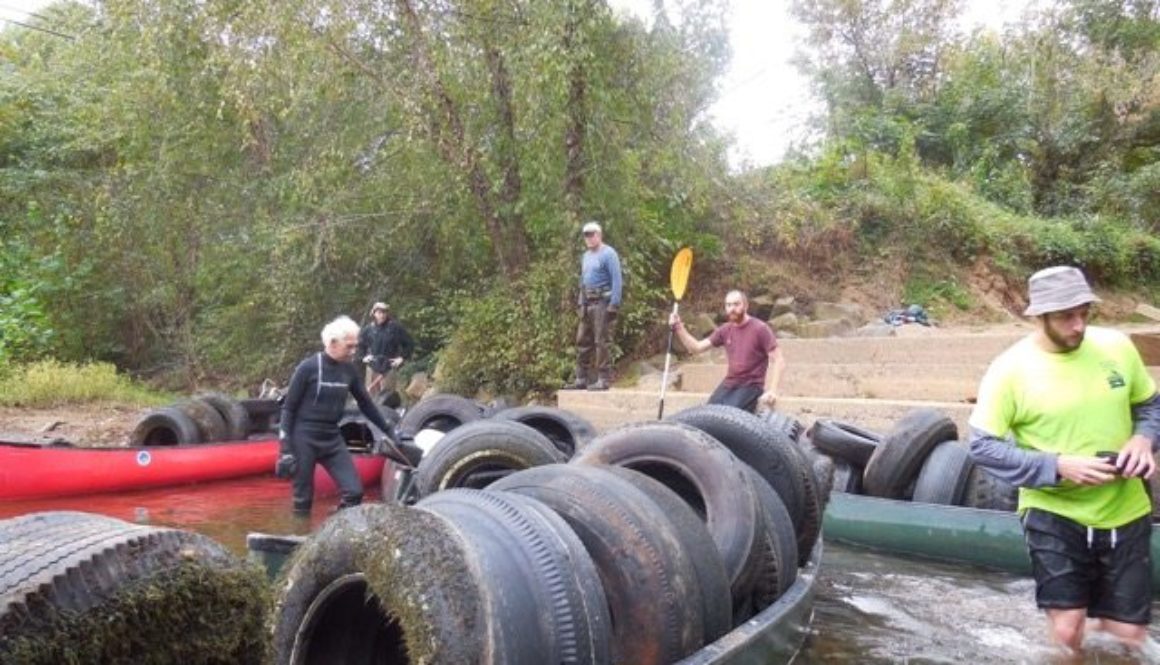
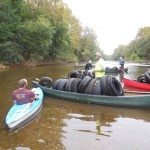
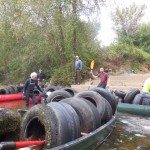
Volunteers with the Rivanna Conservation Society removed a total of 152 tires from a 6.5 mile stretch of the Rivanna. It required 3 trips with heavily laden canoes but the bulk of the tires were removed and the job of keeping the river clean of tires should be manageable now that the bulk of tires are gone and responsibly recycled.
Mike Baum is the Executive Director of Keep Virginia Beautiful. On America Recycles Day, November 15th, he penned an editorial that was shared by news organizations around the Commonwealth. We share it here in its entirety:
Everyone has had heard of recycling, right? The concept is so simple anyone can do it, and when you do, you are protecting our environment.
From paper to plastic and glass to electronics, practically everything that cannot be reused can be recycled. Even simpler is the fact that most cities provide you with a free recycling bin, so it should be a no-brainer to simply put those recyclables out for pickup.
But not everyone does. In fact, as of 2012, the Department of Environmental Quality states we Virginians only have a 41.5 percent recycling rate.
That’s less than half the state.Why is this?
At times, recycling can be confusing if one is not familiar with what’s acceptable to recycle. Who really knows what parts, if not all, of a computer are recyclable?
Although most cities and surrounding suburbs have a recycling program with multiple recycling centers, many rural areas do not. And although you may recycle in your home, does your place of work offer recycling?
Maybe the grocery store offers a plastics or aluminum can recycling bin, but what about a bin to recycle that newspaper you just finished reading?
Unfortunately, the state does not offer a cohesive recycling program and our behavior isn’t cohesive among our daily routines. And as we continue to let this one simple act of environmental protection progress at slow rate, we’re fully doing our part to do something good for our state. That’s why we’re here.
America Recycles Day, celebrated on Nov. 15 every year, is dedicated to encouraging Americans to recycle and to buy recycled products.
The purpose of Keep America Beautiful’s America Recycles Day is to promote the social, environmental and economic benefits of recycling and to encourage more people to join the movement to create a better environment.
Since the first America Recycles Day in 1997, ARD has helped millions of Americans become better informed about the importance of recycling and buying products made from recycled materials.
We at Keep Virginia Beautiful work to engage and educate citizens to enhance our natural and scenic environment. We do this by focusing on three environmental impact areas: litter prevention, recycling and beautification.
In 2013, we partnered with the 36 state parks in Virginia to provide 250 recycling carts to be used throughout the park system. This year, we provided them with recycling bags to be given to overnight guests for their recycling use. Even the bag is recyclable.
In 2011, we gave the city of Richmond 100 recycling carts and 25 cigarette receptacles to be used at festivals and events. That first year alone, the city saved 25,000 pounds of recyclables from the landfill. These are just a few of the recycling initiatives we’ve started to help support our state. But let’s be honest. We can’t do it alone.
Protecting our state’s environment won’t happen overnight or even years down the road. It’s a continuous and collaborative effort among environmental organizations and you. Please help us support our state’s environment by taking the first step to recycle.
Upcoming Keep Virginia Beautiful programs:
“30 Grants in 30 Days”: Since 2011, Keep Virginia Beautiful has awarded 120 grants to a variety of organizations throughout the commonwealth supporting community projects focused on litter prevention, recycling and community beautification.
Cigarette Litter Prevention Campaigns: Partnering with Altria, Virginia State Parks and many festivals, we are working to decrease cigarette litter .
Virginia Schools: Recycling Rules: We are bringing recycling bins to classrooms in Richmond City Public Schools and eventually school districts across the state. This will enable us to create best practices to make the program sustainable for all school districts in the commonwealth in need of a recycling program.
America Recycles Day: Keep Virginia Beautiful is involved in many recycling events for America Recycles Day around the commonwealth.
We continue to seek partners to focus on this program in 2015 to make a difference in communities around the state.
We’re lucky to have great partners around the Commonwealth of Virginia. We also have wonderful support from such national businesses as Waste Management, Walmart, and Lowe’s.
Last week we had a wonderful little fundraiser called “Helping Hams.” Some of the best BBQ available near our home office in Richmond can be found at Buz and Ned’s Real Barbecue, where they’ve been smoking and glazing for almost 20 years. They chose a night and invited us in, we enjoyed some ribs and delicious baked beans, and a portion of the evening’s proceeds helped us to fulfill our mission.
This weekend we’ll enter into a similar partnership with Richmond market Ellwood Thompson’s. They’re a locally and independently owned grocer with a pretty deep commitment to clean and sustainable food. Their mission is “To feed the heart and soul of our community through a strong commitment to local and organic foods.” What started out as a small corner grocer is now over 20,000 square feet, with over 120 employees, a great meat and seafood department, a really cool cafe, and a big community room that they use for classes and seminars on how you can eat better or become a better steward of the environment through your food choices.
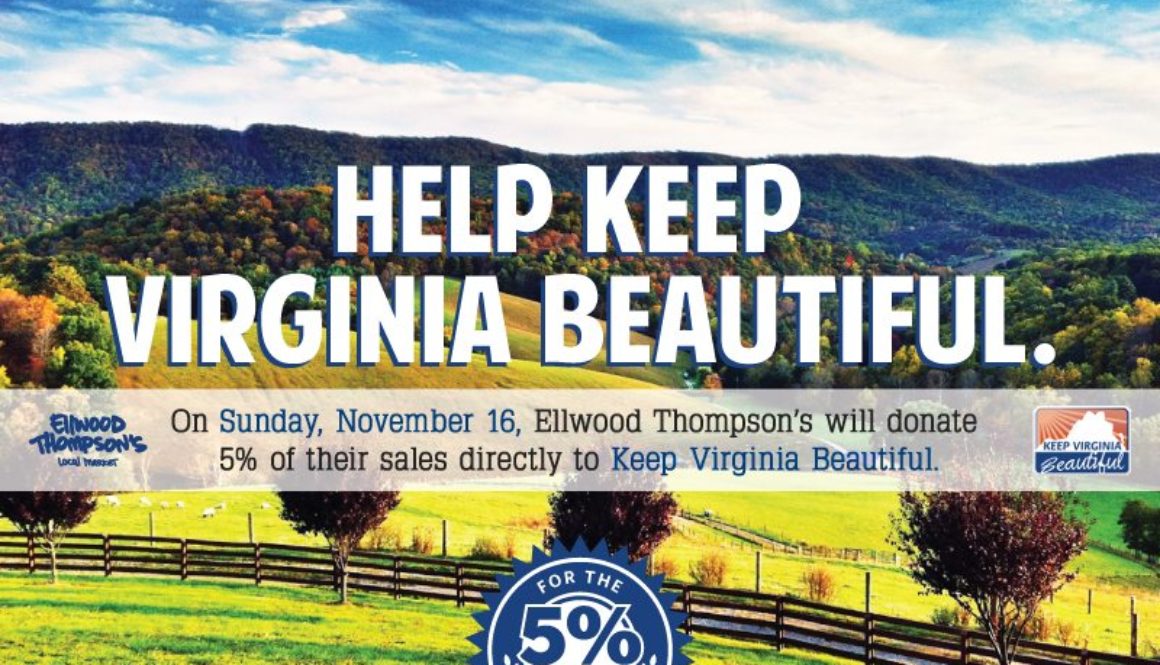
Anyway, on November 16th they’re doing the same sort of “Helping Hams” deal for us. If you come by Ellwood Thompson’s and buy some delicious and nutritious foods, 5% of each sale will go towards helping Keep Virginia Beautiful in our mission. All we have to do is bag some groceries…
By the way, we’re seeking some volunteers to help us to bag some groceries.
We hope that we’ll see you on Sunday at Ellwood Thompson’s!
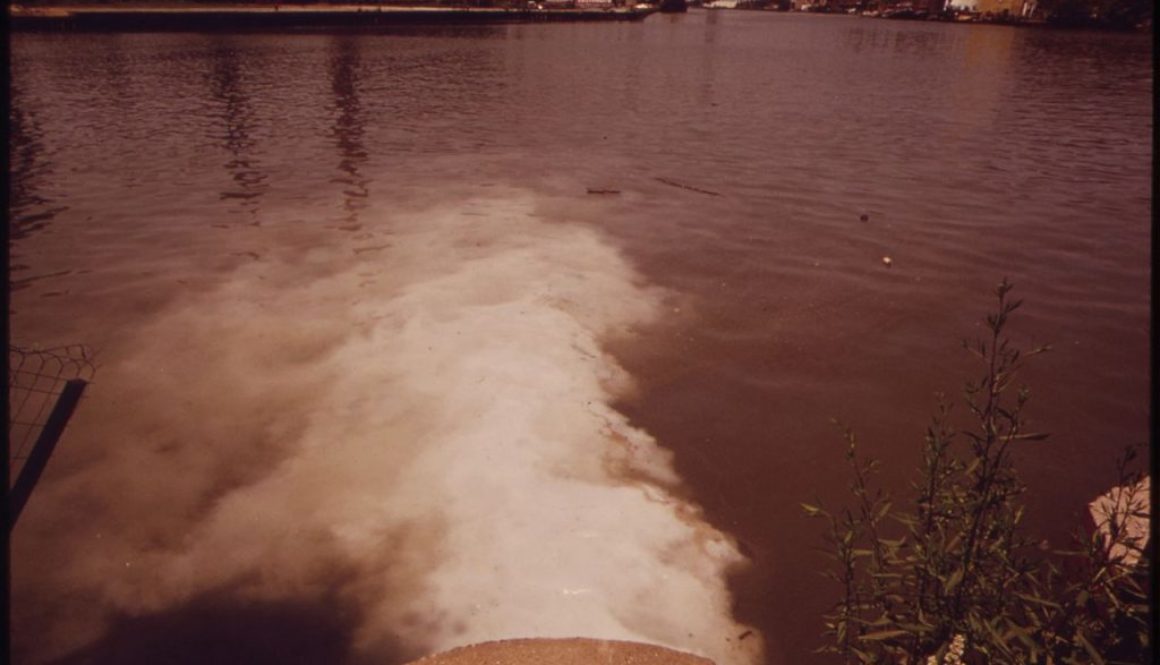
You’ve probably heard the story of the time a river caught on fire. It’s sort of famous.
In June of 1969, the Cuyahoga River in Cleveland, Ohio, caught on fire. Technically, an oil slick on the river caught on fire, nearly destroying two railroad bridges and causing over $100,000 dollars in damage (1969 dollars, by the way). Folks in Cleveland, however, thought “NBD” (that’s “No Big Deal” if you’re still using a flip phone).
You see, that wasn’t the first time that the Cuyahoga had caught on fire. The first reported fire on the river was in 1868, and it flared up over a dozen times before the 1969 fire. TIME Magazine said that the river “oozes rather than flows,” and a person in the water “does not drown but decays.” It was TIME, in fact, that made the 1969 fire a very Big Deal. They posted a photo on the cover of the popular magazine showing towering flames engulfing a ship.
That photo, BTW, wasn’t from the 1969 fire. Fires and the level of pollution in the river were so pervasive that nobody thought to take a picture that June. TIME used a photo of a 1952 fire.
At the time, the city of Cleveland had already approved a $100 million bond (again, 1969 dollars) to finance cleanup efforts for the Cuyahoga. In contrast, our Federal government allotted $180 million for water quality and pollution efforts for the entire nation that year. But the photo on the cover of TIME inspired outrage across the country, and a great mob of students from Cleveland State University marched on the river to protest pollution – our very first Earth Day. The 1969 fire inspired our modern environmental movement.
But let’s talk about Time, and not the magazine. From a physics standpoint, Time is a relative construct, and there’s much we don’t know about it. To give you a grasp of how tenuous Time is, consider this: Time is bound relative to gravity. Time ticks by faster at the Summit of Mt. Everest than it does on the floor of Death Valley.
We’ll take a moment of Time and let that sink in…
Put in the simplest terms, Time is like a river: It flows one way. When you’re standing on the riverbank, what rushes past your feet is the right now. Looking up stream, we get a glimpse of what’s coming, our future. Looking downstream, we see things that have already approached and passed. That’s our history, our yesterday.
The problem in Ohio was that the proud Buckeyes had no sense of Time. Everything about their river was downstream. For over a century, the Cuyahoga was nothing more or less than a great place to dump stuff. They never looked upstream.
Many of our efforts, and especially the efforts of you, are focused on running downstream to fix the effects of what some thoughtless individual did upstream. Our groups and affiliates have fished tires out of rivers, tires that have no doubt been there for decades. They pick up litter and clean flowerbeds and more. They are fixing yesterday.
But they often deal with the river at our feet. They create a community garden where there once was a vacant lot. They initiate a recycling program to break the constant stream towards the county dump. They are changing things right now.
Our favorites are the initiatives that focus upstream. These are programs that inform and educate others, warning them of the dangers of ignoring Time and the river, and illustrate the benefits of keeping it clean. They are proactively protecting tomorrow.
Ultimately, our environment is the river, and it will always flow downstream. With our help and protection, it won’t be on fire when it passes the next generation.