
Reel in Your Plastic
 Virginia offers some of the finest freshwater fishing in the country. According to Fish Virginia First, 80,000 anglers visit Virginia each year to fish 176,000 acres of public lakes statewide. Added to that, the shoreline of the tidal portions of Chesapeake Bay and its tributaries stretches 7,213 miles! Whether you’re a casual angler or a serious expert, Virginia is a great place to cast your line.
But Virginia’s waters are not a place to leave your lines behind!
Monofilament fishing line is plastic, and leaving tangled or extra fishing line in the water is litter. Improperly discarded fishing line, nets, and hooks entangle wildlife and can jam boat propellers.
The Wildlife Center of Virginia reports that Canada Geese are the most frequently admitted fishing gear victims. Waterfowl and turtles become entangled; birds can be affected when fishing line is used as nesting material. Hooks left in released fish can also be ingested by predators such as birds or large turtles.
The staff at Keep Virginia Beautiful saw first-hand sea turtles at the Virginia Aquarium that had ingested fishing hooks that required surgery. We’re fortunate to have these facilities in the Commonwealth to treat injured wildlife, but in this case, the injuries could be avoided if people handled their fishing gear properly.
Fortunately, many boat ramps, parks, and marinas throughout the state now have monofilament recycling bins. Virginia Marine Resources Commission has a Virginia Fishing Line Recycling Program, which is run jointly by the Virginia Marine Resources Commission and the Virginia Department of Game and Inland Fisheries with support from the Boat US Foundation and the Virginia Aquarium. The fishing line is melted into plastic pellets that are then used to create fish habitat structures.
FUN FACTS! Here are some incentives to properly dispose of your fishing line:
- You can bring your monofilament fishing line to one of the Dept. of Wildlife Resources offices and receive a free Virginia Wildlife Magazine!
- Cabelas provides a recycling program for their customers who want to do their part in helping reduce the amount of waste that enters landfills. Customers can bring in any type of used fishing line to their local store and it will be recycled into something useful such as tackle boxes or other fishing equipment.
- Cabelas also offers a program called “Reel In Your Line” that encourages customers to take part in reducing marine debris pollution. Customers can bring in any type of used or discarded monofilament line and exchange it for new monofilament line at no charge.
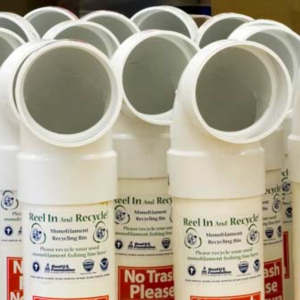 Or, if you’re the do-it-yourself kind of person, you can learn how to build your own monofilament recycling bin with this video, or start a monofilament fishing line recycling program. Click here for a “How To” guide, including where to get low or no fee resources.
This is an area where anglers can have an immediate impact on the waterways they use and enjoy. Share your knowledge by educating friends, family, and neighbors who fish or recreate near water about the harmful impacts of improperly discarded fishing tackle.